
Modern software development isn’t limited by how fast teams can write code. It’s limited by how fast they can build, test, and safely release it. That’s where CI/CD pipelines come in, and why CI/CD pipeline security has become just as important as speed.
CI/CI pipelines automate the path from commit to production, helping teams ship continuously instead of in large, risky batches. For most teams today, CI/CD isn’t just a nice-to-have, it’s the engine behind modern DevOps.
But there’s a tradeoff.
The same pipelines that accelerate delivery also move risk at scale. Today’s applications are built largely from open source, and those components flow through CI/CD pipelines automatically. Without the right controls, open source vulnerabilities can move through pipelines just as quickly as secure code.
This article breaks down:
- What a CI/CD pipeline is
- How CI/CD pipeline tools work
- How to secure CI/CD pipelines effectively
- CI/CD security best practices for DevSecOps teams
What Is CI/CD?
CI/CD stands for Continuous Integration and Continuous Delivery (or Continuous Deployment). It’s a set of practices that automate the process of building, testing, and releasing software.
- Continuous Integration focuses on integrating code changes frequently into a shared repository. Every change triggers automated builds and tests, helping teams catch issues early.
- Continuous Delivery ensures that code is always in a releasable state. Teams can deploy changes at any time, with confidence that the software has passed necessary checks.
- Continuous Deployment takes this one step further by automatically releasing every change that passes pipeline validation.
Together, these practices reduce manual effort, shorten feedback loops, and make software delivery more predictable.
What Is a CI/CD Pipeline?
A CI/CD pipeline is the automated workflow that implements CI/CD practices. It defines how code moves from development to production, and is made up of several interconnected systems:
- Version control systems manage code changes
- Build tools compile code and resolve open source dependencies
- Testing frameworks validate application behavior
- Artifact repositories store build outputs
- Deployment tools manage releases across environments
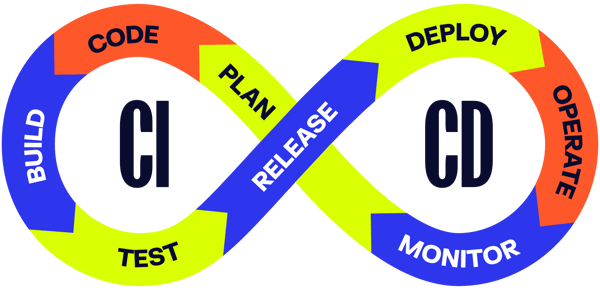
Pipelines are more than automation. They standardize how software is built, tested, and released. Every change follows the same defined path, reducing variability and making delivery more predictable. As CI/CD pipelines become central to how software moves from idea to production, they also become a central point of control. How they’re designed (and what they enforce) has a direct impact on how teams deliver software at scale.
Why CI/CD Pipeline Security Matters?
Since CI/CD pipelines are at the center of modern software delivery, they are often at the center of software risk. In a typical CI/CD pipeline, code is pulled from source control, dependencies are retrieved often from public repositories, builds are executed automatically, and artifacts are deployed across multiple environments.
This level of automation is what makes CI/CD powerful. But it also means that if something goes wrong, it can go wrong very quickly. Every stage of a CI/CD pipeline introduces potential risk. Because pipelines are interconnected and continuous, a single issue can propagate across multiple applications, environments, and teams.
This is why CI/CD pipeline security is not just about protecting the pipeline itself — it’s about protecting the entire software supply chain.
The Importance of Shifting CI/CD Security Left
Shifting security left means integrating security checks earlier in the development process. Instead of discovering vulnerabilities late in the release cycle, teams can identify issues during continuous integration, when they’re easier to fix.
This approach reduces friction. Developers don’t have to context-switch or revisit old code. CI/CD security becomes part of the normal workflow rather than a separate phase.
Common CI/CD Pipeline Security Risks
Most CI/CD security issues originate from a lack of visibility and control over what enters and moves through the pipeline.
One of the most significant risks comes from open source dependencies. Modern applications rely heavily on third-party components, and those components may contain known vulnerabilities or even malicious code. This risk is no longer theoretical. It is operating at a massive scale. Sonatype Research identified more than 454,000 new malicious open source packages in 2025 alone, contributing to over 1.2 million known malicious components across ecosystems. Today’s attacks are evolving beyond simply publishing fake packages. In Q1 2026, several legitimate and widely used components were compromised and weaponized.
axios Compromise
The axios npm ecosystem was targeted with a malicious package designed to mimic trusted usage patterns, introducing hidden malicious behavior into downstream applications.
LiteLLM Compromise
A compromised LiteLLM package on PyPI delivered a multi-stage credential stealer, designed to execute during installation and exfiltrate sensitive data from developer environments.
These types of attacks are particularly dangerous because they exploit trust. Instead of tricking developers into installing something obviously suspicious, attackers compromise or imitate packages that appear legitimate, making them far more likely to pass through pipelines undetected.
Dependency confusion and typosquatting attacks remain a major concern, but they are now part of a broader threat landscape where attackers target both what pipelines pull in and what developers already trust. If pipelines automatically pull dependencies without verification, they can unknowingly introduce compromised components. Without proper governance, these risks can be introduced during the build process and carried all the way into production.
Pipelines are also a common place for sensitive data exposure. Misconfigured environments can leak secrets such as API keys, credentials, or tokens through logs or configuration files. Many organizations often struggle with limited visibility into what is actually being built and deployed. Without clear insight into components and artifacts, it becomes difficult to assess risk or respond to newly discovered vulnerabilities.
Why Speed Amplifies CI/CD Security Risk
CI/CD pipelines are designed to run continuously. Every commit can trigger a new build, and every build can lead to a deployment.
This speed is a major advantage, but it also means that vulnerabilities can spread just as quickly as code changes. A single insecure component introduced into the pipeline can be replicated across multiple builds and environments in a matter of minutes.
Without strong security in the CI/CD pipeline, organizations risk scaling vulnerabilities along with their delivery processes.
How to Secure CI/CD Pipelines Effectively
Securing CI/CD pipelines requires a layered, proactive approach. Because pipelines operate continuously and at scale, CI/CD security must be built directly into the workflow, not as an afterthought.
The goal is to reduce risk as early as possible, enforce controls automatically, and maintain visibility across the entire lifecycle. When done right, CI/CD pipeline security enables teams to move fast without introducing unnecessary risk.
1. Control Dependencies at the Source
Open source components can introduce risk if not properly vetted. Controlling dependencies at the source means ensuring that only trusted, secure components are allowed into the pipeline in the first place. This reduces the likelihood of introducing open source vulnerabilities or malicious packages during the build process.
Teams should:
- Use trusted, curated repositories as the primary source of components
- Avoid pulling directly from unknown or unverified public sources
- Continuously monitor for vulnerable, outdated, or risky dependencies
Tools like Sonatype Repository Firewall help enforce this control by blocking any malicious packages from entering the repository, reducing exposure to malicious open source.
2. Automate Security and Policy Enforcement
In fast-moving CI/CD environments, manual security reviews don’t scale. Pipelines need to enforce rules automatically and consistently across every build.
Automated policy enforcement ensures that risky components are identified and stopped before they progress further in the pipeline. A policy engine removes subjectivity, ensuring all teams follow the same standards.
Pipelines should be configured to:
- Identify and alert critical vulnerabilities
- Flag policy violations for developer review
- Enforce compliance with security and licensing requirements
Sonatype Lifecycle enables this by integrating directly into CI/CD pipelines, allowing teams to define and enforce policies automatically without slowing down development workflows.
3. Secure Secrets and Access
CI/CD pipelines often require access to sensitive systems, including repositories, cloud infrastructure, and deployment environments. If credentials are not properly secured, they can become a major attack vector. Protecting access controls is essential to preventing unauthorized access or misuse of pipeline resources.
Best practices include:
- Using dedicated secret management solutions instead of storing credentials in code or configuration files
- Avoiding hardcoded credentials in scripts or pipeline definitions
- Applying least privilege access to limit what each user or system can do
Securing access ensures that even if part of the pipeline is exposed, the impact is limited.
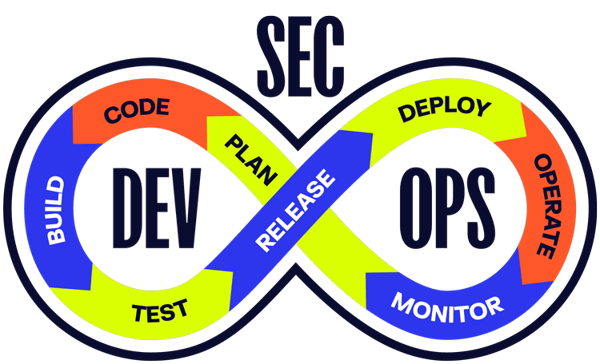
4. Integrate CI/CD Security Early (Shift Left)
Security is most effective when applied early in the software development lifecycle — before code reaches production.
By integrating security checks into the CI stage, teams can identify and fix issues when they are easiest to address. This reduces rework, minimizes disruption, and prevents vulnerabilities from propagating downstream.
When security is embedded early:
- Developers receive immediate, actionable feedback
- Issues are resolved in context, while code is still fresh
- Risk is reduced before it scales across builds and environments
This shift-left approach has become even more important with the rise of AI-assisted development. AI coding assistants are accelerating development by helping generate code and suggesting dependencies, but Sonatype Research found that ungrounded models fabricated 6% of dependency recommendations and recommended “no change” in approximately 1 in every 3 components, introducing new risks.
Because this code is often accepted quickly, it can introduce risk into the pipeline earlier and at greater scale. This makes early-stage controls not just beneficial, but essential.
To safely take advantage of AI-assisted development, teams need to provide context and intelligence at the moment decisions are made. That means evaluating both human-written and AI-generated code against security, quality, and policy standards before it progresses through the pipeline.
When done right:
- Developers and AI-coding assistants receive contextual guidance on whether components are safe to use
- AI-suggested dependencies are evaluated before they are introduced into builds
- Security becomes a feedback loop that improves decisions, not just a gate that blocks releases
This is where solutions like Sonatype Guide add value. By delivering real-time, contextual intelligence directly to AI-coding assistants, Sonatype Guide ensures better choices are made upfront, reducing the likelihood of introducing risk in the first place.
By combining shift-left security with intelligent developer guidance, organizations can fully realize the speed benefits of CI/CD and AI without allowing risk to scale alongside them. This approach aligns with DevSecOps principles, making security a natural part of development rather than a separate phase.
5. Continuously Monitor for Risk
CI/CD security doesn’t stop at build time. New vulnerabilities are discovered every day, and previously approved components can become risky over time.
Continuous monitoring ensures that teams maintain visibility into their applications even after deployment. It allows organizations to respond quickly when new threats emerge.
Teams should be able to:
- Identify newly disclosed vulnerabilities affecting existing components
- Prioritize and remediate risks based on severity and impact
- Maintain an up-to-date understanding of application risk across environments
By combining monitoring with earlier controls, organizations create a feedback loop that continuously improves CI/CD pipeline security
Best Practices for Secure CI/CD Pipelines
Building a secure CI/CD pipeline isn’t just about adding controls — it’s about designing pipelines that are resilient, observable, and tamper-resistant by default. The most effective teams go beyond basic safeguards and implement practices that protect the integrity of the entire delivery process.
The following best practices focus on strengthening CI/CD pipeline security without introducing friction into developer workflows.
Treat the CI/CD Pipeline as Critical Infrastructure
CI/CD pipelines are often overlooked as just “build systems,” but in reality, they function as high-value infrastructure with direct access to source code, dependencies, and production environments.
That means they should be secured with the same rigor as production systems:
- Harden build environments and runners
- Isolate pipeline execution to reduce cross-project risk
- Regularly audit pipeline configurations and permissions
When pipelines are treated as infrastructure, security becomes a design requirement.
Verify the Integrity of Everything That Moves Through the Pipeline
A secure pipeline doesn’t just trust inputs, it verifies them. This includes validating the origin and integrity of dependencies.
Techniques such as checksum validation, artifact signing, and provenance tracking help ensure that what gets deployed is exactly what was built, and hasn’t been tampered with along the way. This is especially important in preventing supply chain attacks that target intermediate stages of the pipeline.
Implement Immutable and Reproducible Builds
One of the most effective ways to reduce risk is to ensure that builds are consistent and reproducible.
Immutable builds mean:
- The same input always produces the same output
- Artifacts cannot be modified after creation
- Environments are standardized across stages
This reduces the risk of “hidden changes” being introduced between build and deployment, and makes it easier to audit and trace issues when they occur.
Limit Pipeline Permissions and Reduce Blast Radius
Not every part of the pipeline needs full access to everything. Applying granular permissions helps reduce the impact of a compromise.
Consider separating permissions for build, test, and deployment stages. Also restrict access to production environments to only those who need it. By limiting what each stage or service can do, organizations reduce the likelihood that a single breach can escalate into a larger incident.
Establish Traceability Across the Software Supply Chain
To secure CI/CD pipelines effectively, teams need to know exactly:
- What components are included in each build
- Where those components came from
- How they moved through the pipeline
This level of traceability is essential for both security and compliance.
Generating and maintaining artifacts like SBOMs (Software Bills of Materials) helps teams track dependencies and quickly assess impact when vulnerabilities are disclosed. Sonatype SBOM Manager helps teams manage SBOMs across their applications to be audit-ready at any time.
Design Pipelines for Failure and Recovery
No pipeline is completely immune to risk. The goal is not just to prevent issues, but to detect and recover quickly when they occur.
Resilient pipelines should:
- Fail safely when anomalies are detected
- Provide clear logging and traceability for investigation
- Support rapid rollback or remediation
This reduces downtime and limits the impact of security incidents.
Align Pipeline Security with Organizational Risk Tolerance
Not every application requires the same level of control, but every pipeline should enforce clear, consistent policies based on what’s being built and deployed.
For example, applications that handle sensitive data or are exposed externally may require stricter enforcement around vulnerabilities and component usage, while lower-risk applications may allow for more flexibility in how issues are addressed.
The key is not to treat every pipeline identically, but to ensure that policies are clearly defined and consistently applied based on risk.
Enforce Automated Policies at Scale
Defining policies is only part of the solution. In fast-moving CI/CD environments, those policies must be enforced automatically and consistently across every build.
Manual reviews can’t keep up with the speed and scale of modern pipelines. Automated policy enforcement ensures that every component and build is evaluated against the same standards, without introducing friction or relying on individual judgment.
Effective policy automation allows teams to:
- Block high-risk components, such as those with critical vulnerabilities or known malicious behavior
- Flag lower-risk issues for review without stopping development
- Enforce licensing and compliance requirements automatically
- Apply different policy thresholds based on application risk or environment
This creates a system where security decisions are predictable, repeatable, and scalable. SCA solutions like Sonatype Lifecycle enable organizations to define and enforce these policies directly within the CI/CD pipeline. By automating policy evaluation and providing clear feedback to developers, teams can reduce risk without slowing down delivery, ensuring that security keeps pace with development at scale.
Conclusion: Building Fast Without Breaking Trust
The goal of CI/CD pipeline security isn’t to slow down delivery — it’s to make fast delivery safe. By combining automation, policy enforcement, dependency governance, and continuous monitoring, teams can build pipelines that support both speed and security. That’s what enables modern DevSecOps: delivering software quickly, without compromising trust.
Secure Your CI/CD Pipeline
Related Resources
Frequently Asked Questions
What is CI/CD in simple terms?
CI/CD stands for Continuous Integration and Continuous Delivery (or Deployment). It’s a way to automate building, testing, and releasing software so teams can deliver updates quickly and reliably. Instead of manual processes and large releases, CI/CD enables smaller, continuous changes that are validated automatically.
What is a CI/CD pipeline?
A CI/CD pipeline is the automated workflow that takes code from development to production. It includes stages such as building the application, running automated tests, resolving dependencies, creating artifacts, and deploying those artifacts across environments. Pipelines standardize how software is delivered, making releases more consistent and predictable.
Why is CI/CD important in DevOps?
CI/CD is a core part of DevOps because it enables automation, faster feedback, and continuous delivery of value. It reduces manual work, minimizes deployment risk, and helps development and operations teams collaborate more effectively. Without CI/CD pipelines, DevOps practices are difficult to scale.
What is CI/CD security?
CI/CD security refers to the practices and tools used to protect the CI/CD pipeline and the software it produces. This includes securing dependencies, enforcing policies, protecting credentials, and monitoring for vulnerabilities throughout the development lifecycle. CI/CD security is a critical part of modern software supply chain security.
How do you secure a CI/CD pipeline?
To secure a CI/CD pipeline effectively, teams need to control what enters the pipeline and how it moves through each stage. This includes:
- Governing open source dependencies and using trusted repositories
- Enforcing security and compliance policies automatically
- Securing secrets and credentials used in builds and deployments
- Enable continuous vulnerability management and monitoring, even after deployment
Solutions like Sonatype Lifecycle helps automate these controls, allowing teams to secure pipelines without slowing down development.
What tools are recommended for securing CI/CD processes?
Securing CI/CD processes typically requires a combination of tools that integrate into the pipeline:
- CI/CD orchestration tools (e.g., Jenkins, GitHub Actions)
- Artifact and repository management (e.g.,Sonatype Nexus Repository)
- Vulnerability scanning and policy enforcement (e.g., Sonatype Lifecycle)
- Secret management tools for protecting credentials
The most effective approach is to integrate security tools directly into the pipeline so that checks happen automatically during development and build processes.
What are the most effective CI/CD security best practices?
The most effective CI/CD security best practices focus on automation, consistency, and visibility. These include:
- Verifying and governing open source dependencies before they enter the pipeline
- Enforcing security policies automatically across all builds
- Securing pipeline infrastructure and access controls
- Tracking and validating artifacts throughout the pipeline
- Continuously monitoring for newly discovered vulnerabilities
These practices align with DevSecOps by embedding security directly into development workflows.
Are there industry standards for CI/CD pipeline security?
Yes, CI/CD pipeline security aligns with several widely adopted frameworks and standards, including:
These frameworks emphasize securing the software supply chain, enforcing controls early, and maintaining visibility into components and artifacts, which are principles that directly apply to CI/CD pipelines.
How can I improve the security of my CI/CD pipeline?
Improving CI/CD pipeline security starts with increasing visibility and control. Teams should:
- Identify all dependencies and their sources
- Introduce automated policy enforcement in CI pipelines
- Use trusted artifact repositories to manage components
- Integrate security checks early in development workflows
- Continuously monitor for new vulnerabilities
Tools like Sonatype Lifecycle help teams operationalize these improvements by providing real-time insight into component risk and enforcing security policies throughout the pipeline.