
SONATYPE SOLUTIONS
The Industry's Most Trusted Open Source Security Software
Protect your software supply chain with Sonatype's precise, automated vulnerability detection for safer, faster innovation.
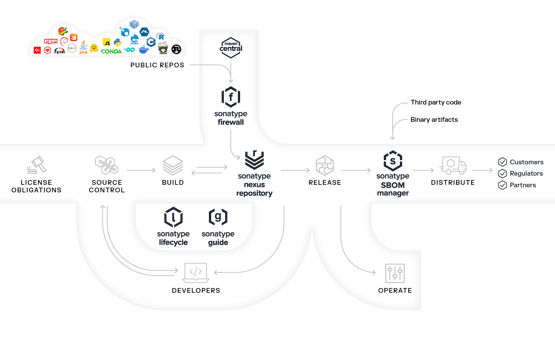
Build Safely Without Compromising Speed
You can’t fix what you can’t see. Sonatype finds and fixes more open source risks than any other provider. Take proactive steps now to increase your open source security into every stage of development and defend against the unknown.
Increase Resiliency with Sonatype’s Open Source Software Security Tools
Build secure software fast with a comprehensive approach to open source security. Don’t just react to security threats — prevent them with Sonatype’s trusted suite of open source security solutions.
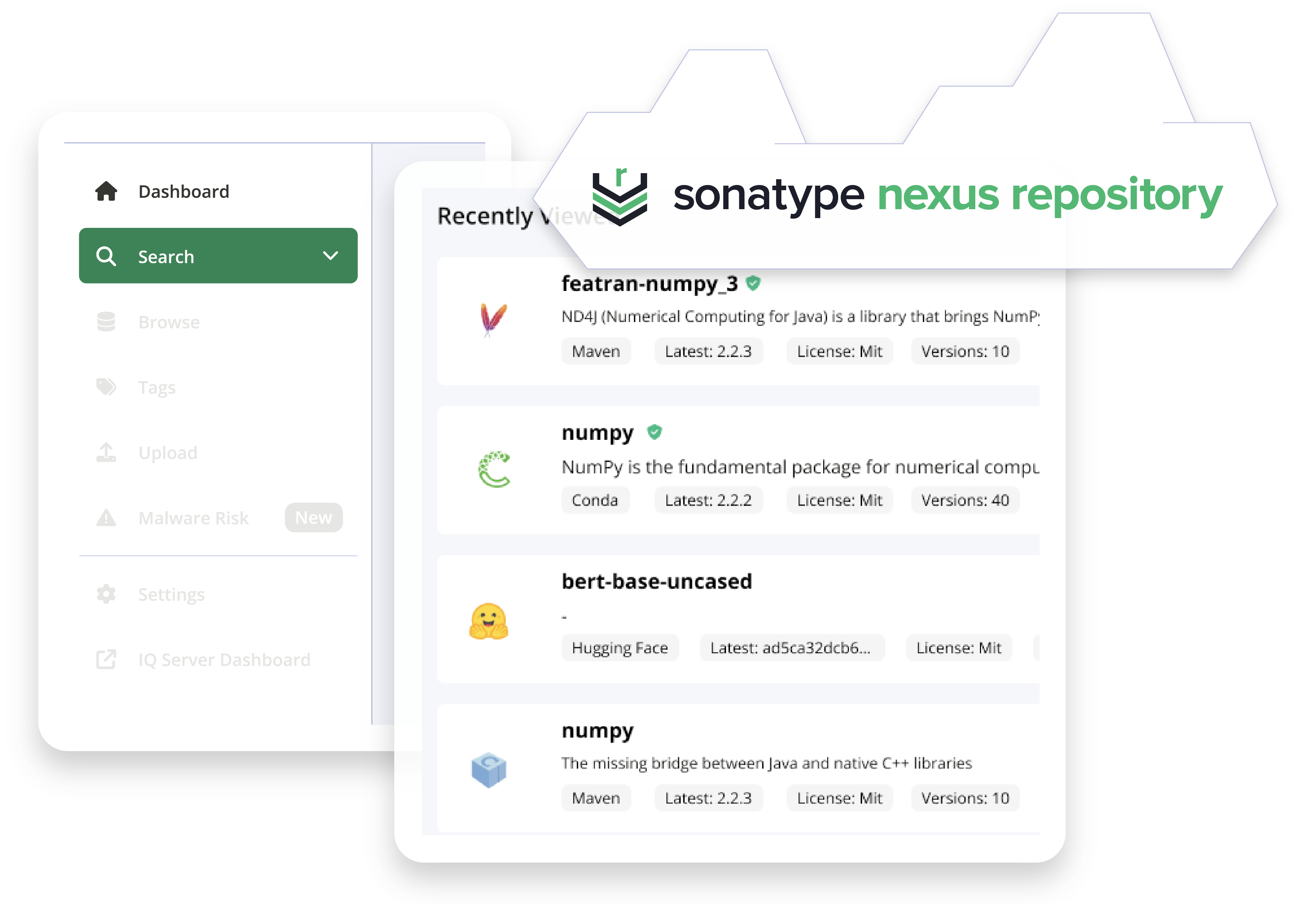
Sonatype Nexus Repository
Securely manage, store, and distribute your components and AI Models with confidence using Sonatype Nexus Repository. As a centralized repository manager, your development teams have quick access to the healthiest and most trusted components available, ensuring secure builds. Nexus Repository ensures consistency across your software supply chain while giving teams the control they need to build secure, high-quality software at scale.
Sonatype Lifecycle
Streamline open source security by automating the way you identify, manage, and mitigate risk across your software supply chain. Sonatype Lifecycle makes it easy to scan every open source component for known vulnerabilities and enforce policies to keep your SDLC secure. Cut manual reviews by 90% with automated fixes and actionable remediation intelligence, powered by the industry’s most comprehensive open source security vulnerability database. Eliminate the noise with the lowest false positive rate in market.
Sonatype Firewall
Block malicious code effectively and securely with Sonatype Firewall. By leveraging the industry’s most advanced open source policy engine, you can automatically quarantine and analyze every component before it is downloaded, ensuring only safe and approved code enters your repositories. Boost your open source software security by stopping threats at the source.
Sonatype SBOM Manager
Streamline compliance and enhance security with Sonatype SBOM Manager — the industry’s only enterprise-grade solution to manage Software Bills of Materials (SBOMs) at scale. Automatically generate, store, and track SBOMs across every application in your portfolio to ensure transparency, meet evolving regulatory requirements, and quickly respond to security incidents. Sonatype SBOM Manager helps you stay audit-ready, reduce risk, and deliver secure, compliant software with confidence.


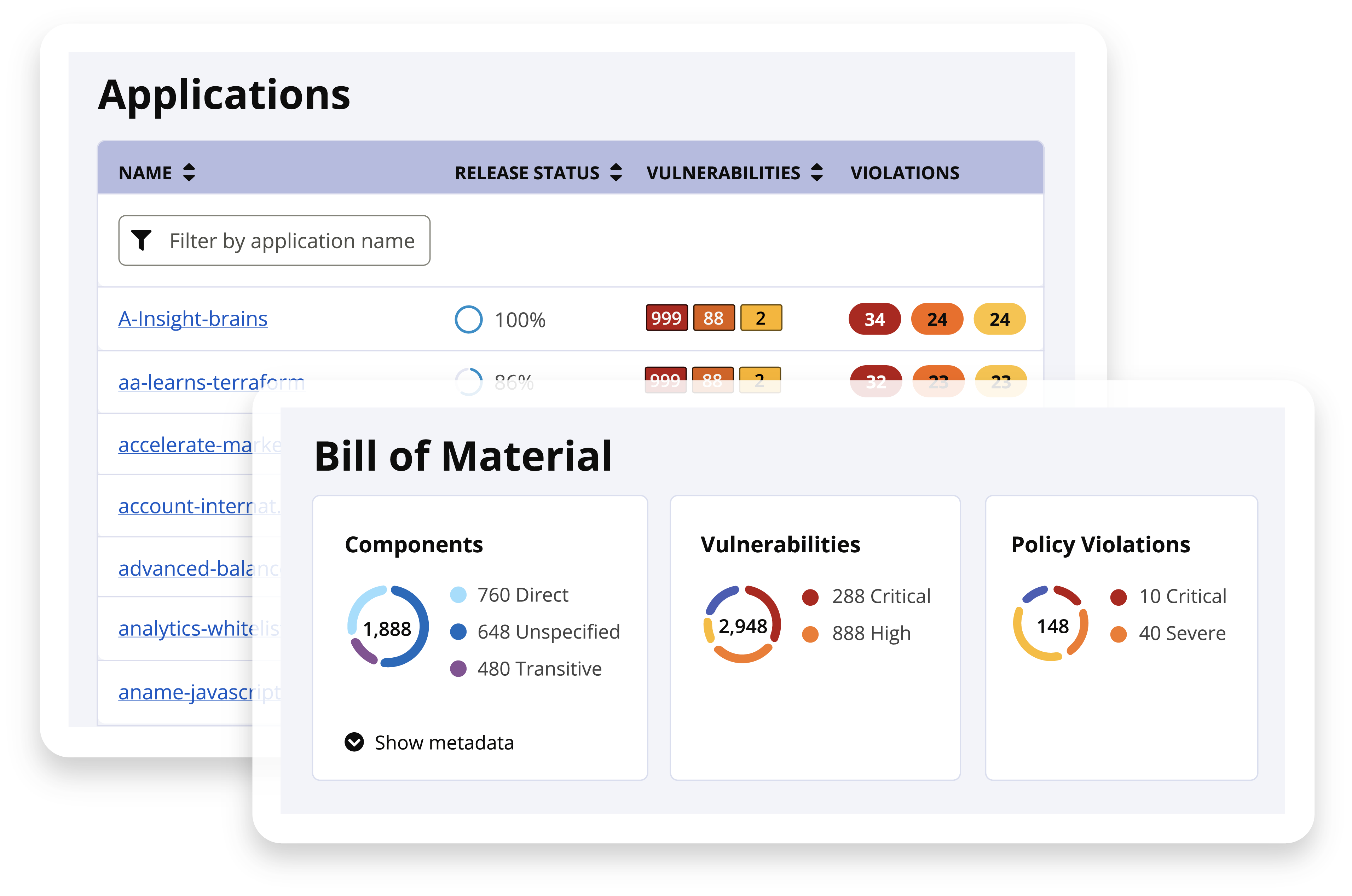
Open Source Insights That Translate to Actionable Next Steps

Six Key Benefits of End-to-End Open Source Security with Sonatype
Effective open source security ensures organizations can automatically govern every stage of the software development lifecycle — from sourcing to production — without slowing down innovation.
Early Vulnerability Detection
Block vulnerable components early before they reach your codebase to minimize rework and risk.
Continuous Monitoring
Gain end-to-end visibility with automated scans and live monitoring to detect risks fast.
Policy-Driven Automation
Automatically enforce security, licensing, and quality policies for consistent governance.
Improved Developer Productivity
Reduce alert fatigue by integrating security into workflows with automated fixes for fast resolution.
License Compliance
Automatically manage license obligations for all components to avoid legal and compliance issues.
Precise Remediation Guidance
Get developer-focused insights to quickly fix vulnerabilities, reduce false positives, and boost security.

Sonatype Named a Leader in the 2026 Gartner® Magic Quadrant™ for Software Supply Chain Security
We’re proud to announce that Gartner has recognized Sonatype as a Leader in the 2026 Gartner® Magic Quadrant™ for Software Supply Chain Security, evaluating vendors helping organizations secure software across open source, AI-generated code, dependencies, and software supply chains.

Explore Open Source Security Insights
Frequently Asked Questions
What is open source security?
Open source security ensures every component used in your software supply chain is trustworthy, up-to-date, and vulnerability-free. With up to 90% of modern applications built on open source, even a single insecure dependency can expose your entire system. Open source security software is critical for protecting against breaches, reducing technical debt, and keeping innovation moving fast.
How do I keep open source dependencies secure?
The single most important thing you can do to secure your open source software is to continuously monitor and manage your dependencies. Software composition analysis (SCA) is crucial. SCA identifies and manages open source components in your software to detect vulnerabilities, license risks, and outdated dependencies. Sonatype’s SCA detects vulnerabilities, license risks, and outdated libraries early — so you can secure your software supply chain and ship with confidence. Organizations must regularly monitor for new open source threats and apply patches quickly, use SBOMs to track components, apply strict version controls, have a system in place to fix transitive dependency risk, and automate upgrades.
What tools are available for managing open source software security?
Implementing a strict policy for the usage of open source components and enforcing it through automated open source software security tools like Sonatype Lifecycle is crucial. Sonatype Nexus Repository centralizes component management, Sonatype Firewall blocks risky artifacts, and Sonatype SBOM Manager offers deep visibility for compliance and auditing. Together, they streamline builds and enhance protection.
How can I increase visibility into risks associated with open source development?
To find and fix open source risk across your software development lifecycle (SDLC), you need tools that can identify all risk, not just common CVEs. Not all security tools are created equal. Sonatype's advanced open source security intelligence can help you defend against open source risks without slowing down development.
-
Stop malware and other malicious components and AI models from entering your SDLC.
-
Manage components and AI models securely with malware detection at the repository level.
-
Track every vulnerability and malicious package to ensure your pipelines are healthy.
-
Ensure your SDLC remains secure with automatic policy enforcement and waivers.
Are open source projects more or less secure than proprietary software?
Security depends on proper governance. Open source projects can be more secure due to transparency and community scrutiny, but they also risk unpatched vulnerabilities if not actively maintained. Proprietary software limits visibility but often has dedicated security teams. Security depends more on practices than the model itself. With tools like those from Sonatype, you can track vulnerabilities, ensuring even open source components meet rigorous security standards.
How do open source communities address security threats?
The community addresses open source threats through transparent collaboration, rapid vulnerability disclosure, peer reviews, and timely patches. Many projects have dedicated security teams and responsible disclosure policies to ensure swift identification and resolution of threats. Sonatype enhances this by curating real-time vulnerability intelligence for faster remediation.
How can organizations ensure compliance when using open source components?
By automating governance, tracking licenses, and enforcing compliance policies, organizations can make huge strides in safely managing their open source usage. Maintaining complete SBOMs, using automated tools to track licenses and vulnerabilities, enforcing open source policies at every stage of development, and regularly scanning components to ensure they meet legal and security requirements.
Open source software security is at the heart of Sonatype’s mission. In our experience, there’s no substitute for using trusted sources, maintaining sound SBOM practices, scanning dependencies regularly, applying patches promptly, enforcing security policies with automation, and integrating security throughout the SDLC.
How do I stay updated on new vulnerabilities in open source libraries?
Stay updated by using automated tools that scan for vulnerabilities in real time. Subscribe to vulnerability databases (e.g., CVE, NVD), follow relevant GitHub repos, and join security mailing lists or community forums for timely alerts. Sonatype provides precise and timely vulnerability alerts through its Open Source Intelligence database, which covers 70% more vulnerabilities than other databases.
Secure Your Open Source