
SONATYPE SOLUTIONS
Software Composition Analysis Tools for AI Development
Give developers and agents trusted intelligence and policy guidance with Sonatype’s software composition analysis solution designed for the AI era. Reduce noise, automate fixes, and ship with confidence at AI speed.
AI Accelerates Dependency Decisions
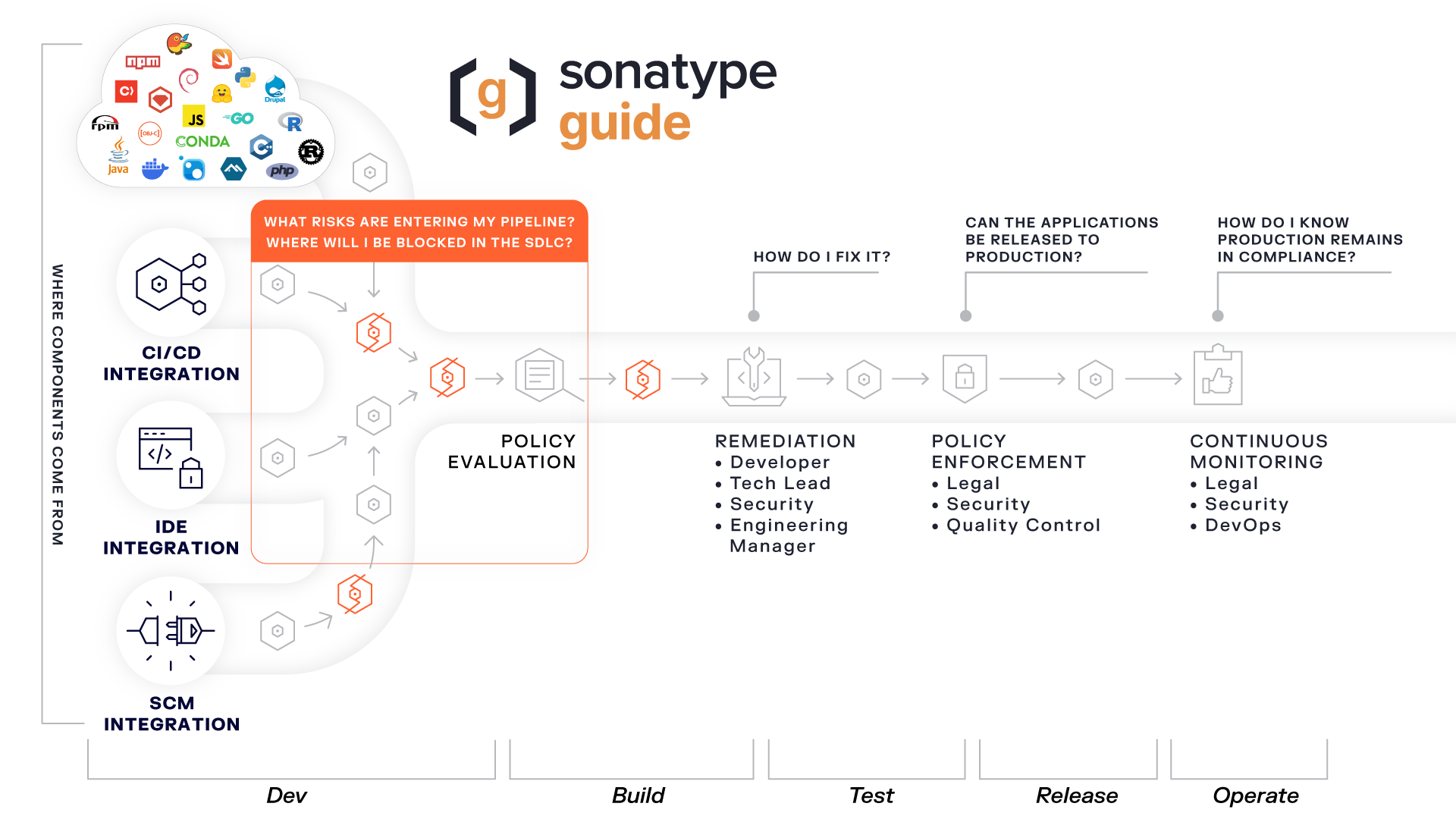
AI-assisted development increases more than code output. It increases the number of dependency decisions entering your software supply chain. Traditional software composition analysis tools can’t keep up. Sonatype Guide bridges the gap with modern SCA capabilities designed for agentic development. Guide helps developers and agents understand component risk before it spreads downstream.
Mitigate Risks Fast with the Best Software Composition Analysis Tools
Sonatype Guide combines high-quality open source intelligence with policy-aware guidance for developers and agents. It enforces custom policies and enables quick remediation by identifying and automating fixes for vulnerable components.
Agentic Dependency Management
AI agents can introduce dependencies faster than manual reviews can keep up. Sonatype Guide brings trusted component intelligence and organizational policy into those decisions, helping developers and agents choose components that meet your standards from the start.
Policy Enforcement
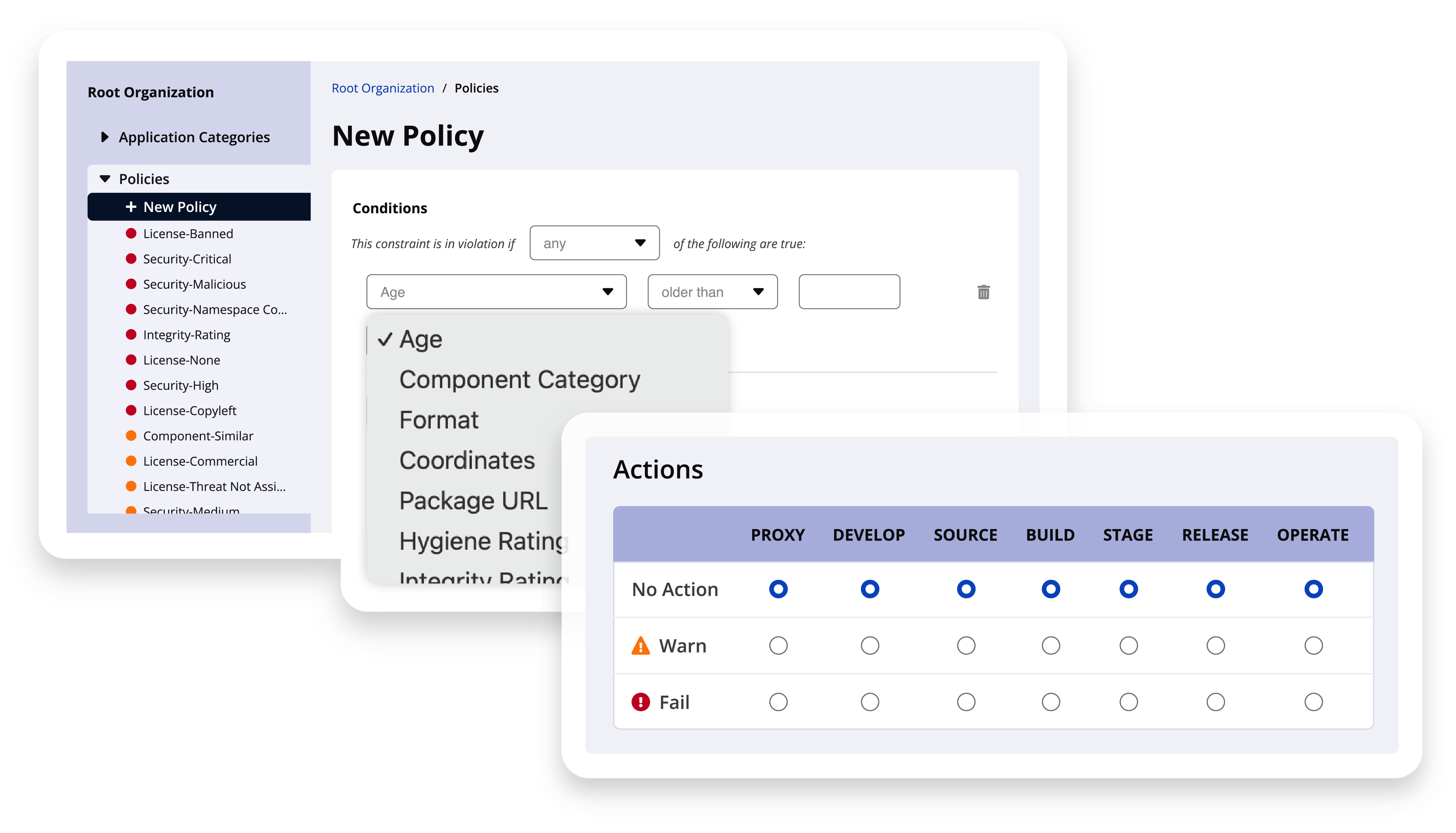
Enforce policies to secure code and flag risky open source components. Sonatype Guide includes 18 default policies, supports custom ones, and integrates with CI/CD to catch violations early and maintain software quality. With build-safe pull requests, ensure component quality for stable and maintainable apps.
Vulnerability Remediation
Identify and fix vulnerable open source components for fast remediation. Sonatype Guide automatically detects vulnerable dependencies and automates issue resolution for zero-effort fixes to move you to a safer version.
Open Source Governance
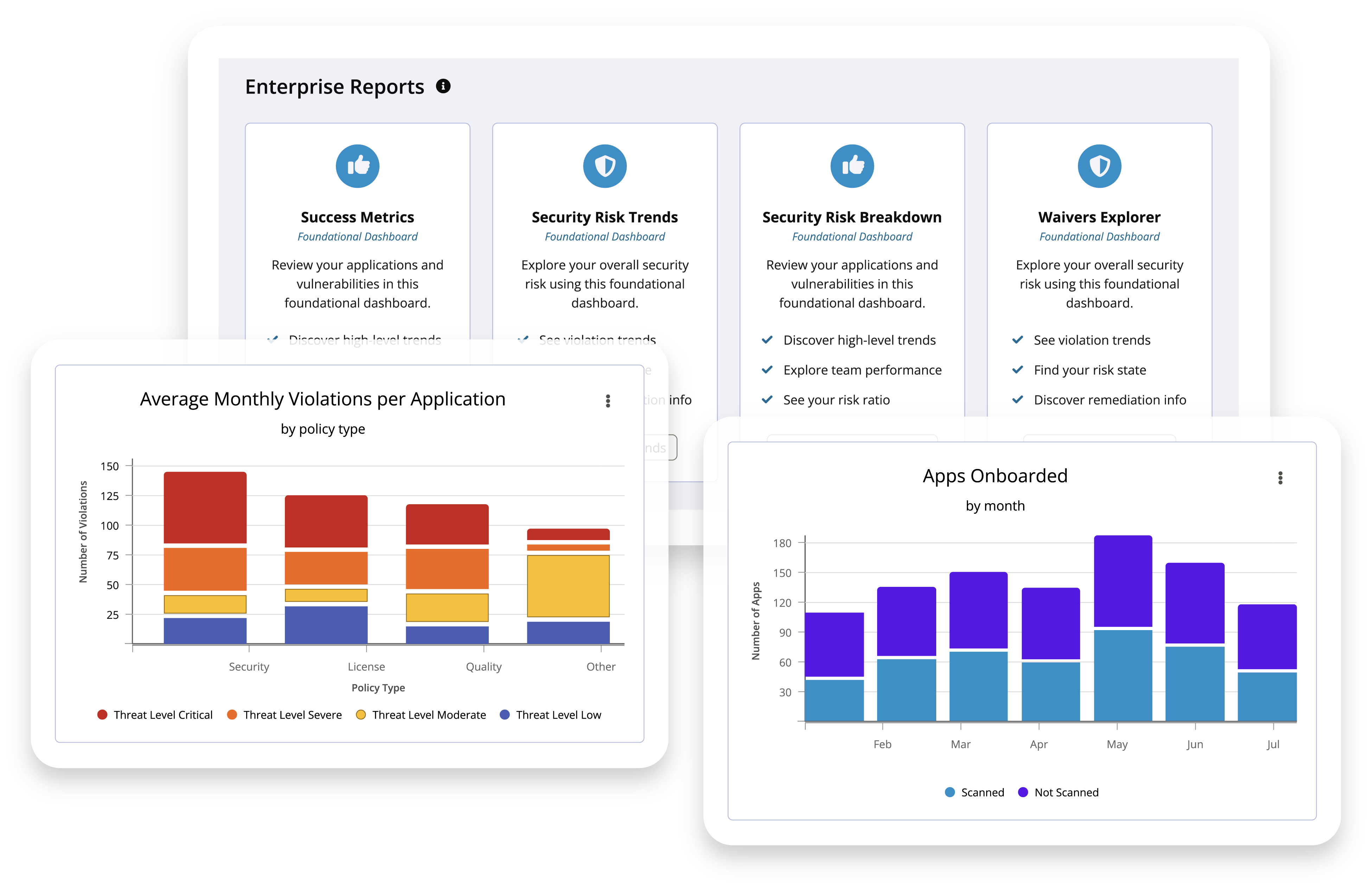
Govern open source and AI development without slowing delivery. Sonatype Guide helps teams enforce consistent security, license, and malware policies across every developer and AI workflow. Prioritize the risks that matter with reachability analysis and maintain the visibility needed to manage risk across the AI SDLC.
AIBOM Management
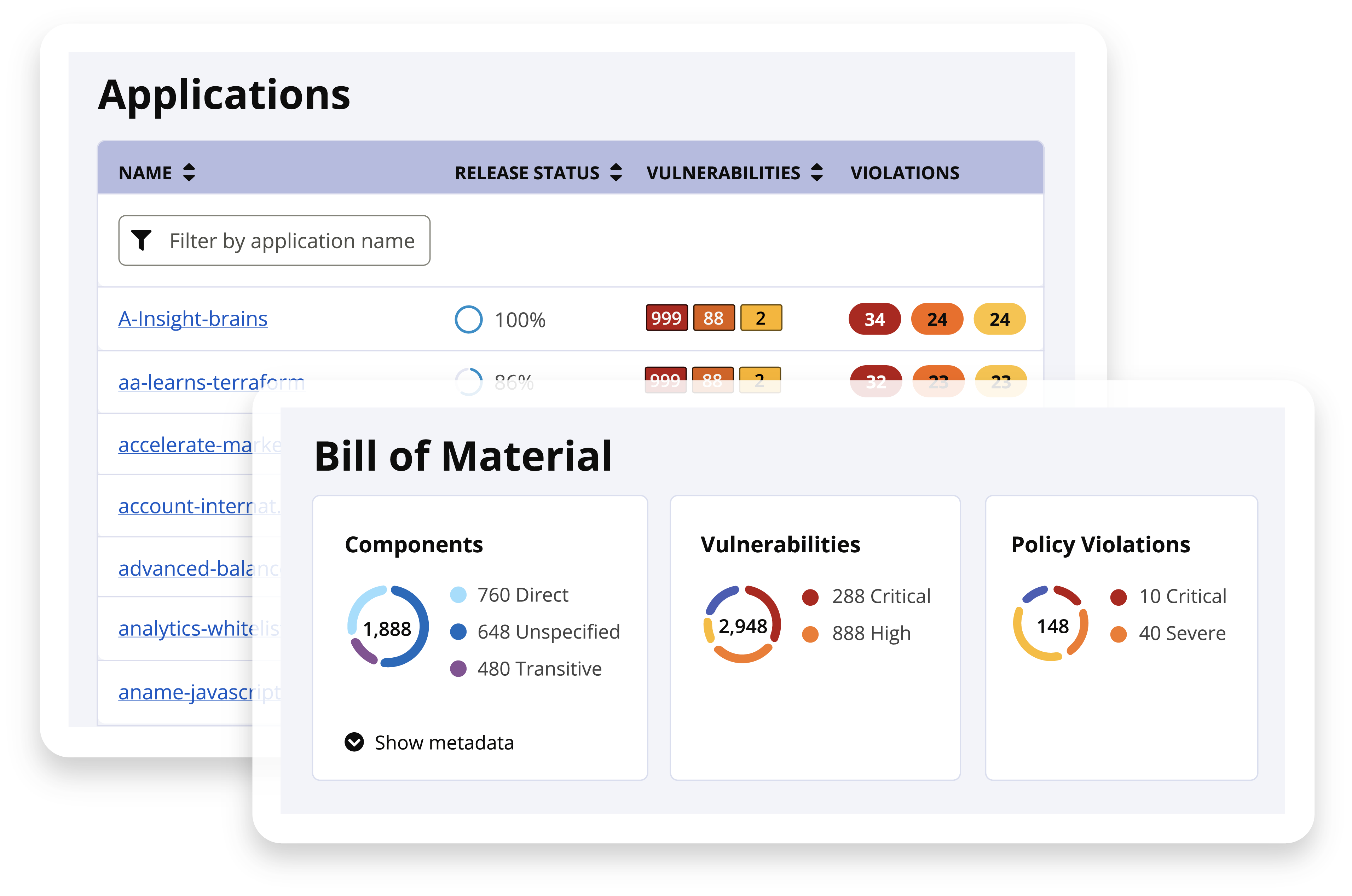
Track open source components to ensure security, compliance, and risk mitigation with comprehensive AIBOM and SBOM management. Sonatype Guide quickly generates BOMs for full application visibility and fast vulnerability remediation and compliance.


Trusted SCA Solutions That Deliver Results
Sonatype Guide helps developers and AI agents make safer component and upgrade decisions at the speed of AI. It delivers precise intelligence, prioritizes meaningful risk, and automates fixes so teams can keep AI-assisted delivery moving without adding security friction.
SCA, AIBOMs, and SBOMs Work Together for Superior Software Security
Combining sophisticated software composition analysis tools with automated AIBOM and SBOM management offers unmatched visibility into your software's components, empowering you to enhance security, and streamline compliance.
More Insight
Gain real-time insight into your apps, security, and license issues.
Risk Mitigation
Protect applications by identifying threats early in development.
Compliance
Customize policies to meet goals and enforce them without slowing down.
Quality of Data
Have confidence in your alerts with near-zero false positives and negatives, there's no rework.
Policy Enforcement
Automate policy checks across tools and guide developers in real time.
Visibility
Get full visibility into third-party code and SBOM compliance risks.

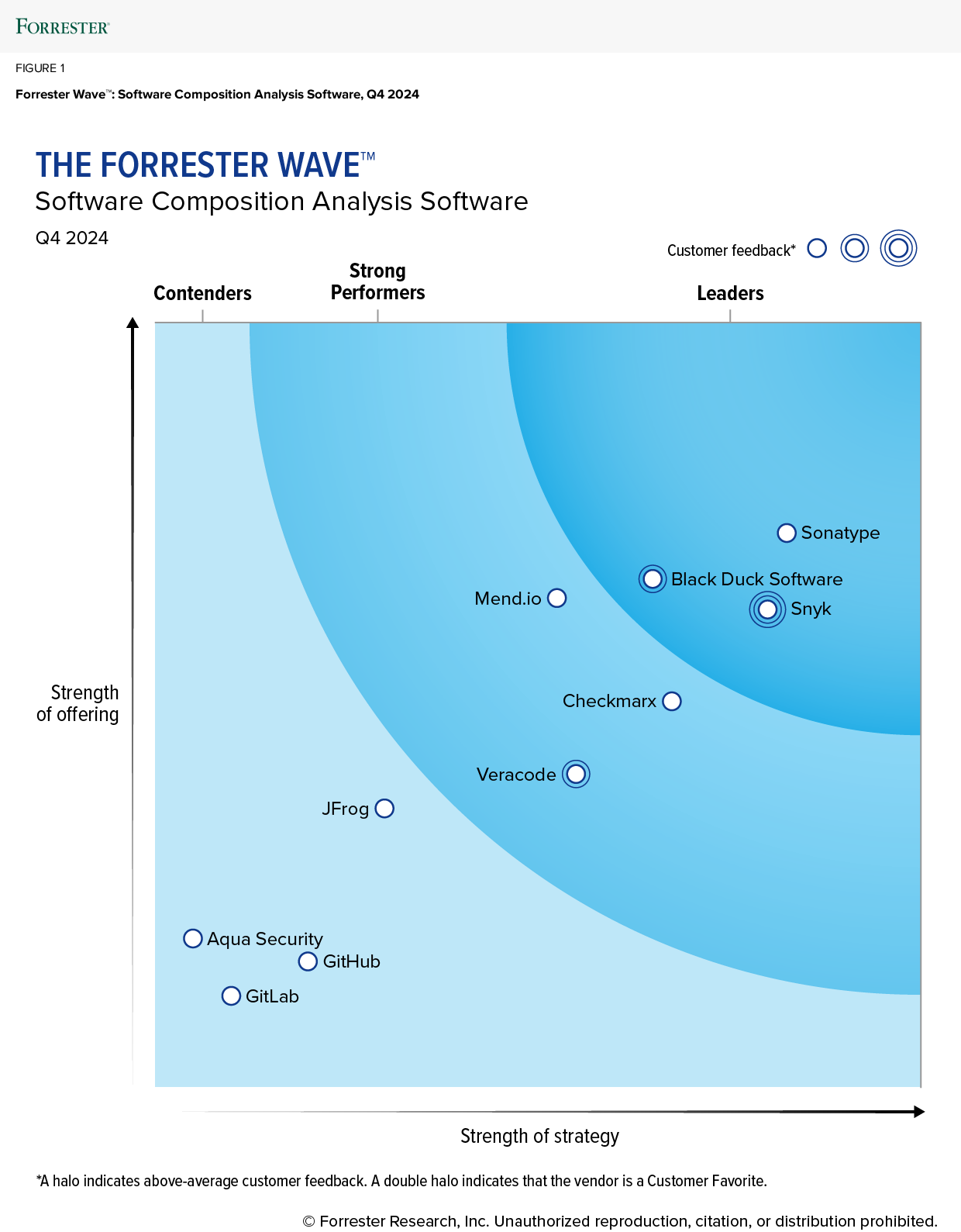
Sonatype Named a Leader in Forrester Wave for SCA Software
Forrester evaluated 10 top SCA providers and named Sonatype a leader with the highest possible scores in the Forrester WaveTM: SCA Software 2024
Explore SCA Insights
Frequently Asked Questions
What is software composition analysis (SCA)?
Software Composition Analysis (SCA), identifies the open source components, transitive dependencies, containers, and AI models used in an application, then evaluates them for security, license, operational, and policy risk. SCA solutions help teams understand what is in their software and make safer dependency decisions before code reaches production.
Why do I need an SCA security tool?
SCA security tools are needed to identify, govern, and remediate risk in the open source components, packages, containers, and AI models used to build your applications. As AI accelerates development, it also increases the volume and speed of third-party component decisions, making it easier for vulnerable, malicious, unlicensed, outdated, or even nonexistent dependencies to enter the SDLC.
Software composition analysis solutions give developers and security teams the intelligence and automated controls to make safer decisions before risky components reach builds or production. This is especially important when vulnerability data is incomplete: Sonatype Research found that nearly 65% of open source CVEs lack an NVD-assigned CVSS score, limiting traditional severity-based triage.
- OSS Security Risks - Detect vulnerable and malicious components, AI models, and libraries before they enter development environments.
- AI-driven Dependency Sprawl - Govern the package and version recommendations generated by coding assistants and agents, including unsupported or hallucinated dependencies.
- License Compliance Complexity - Identify license obligations early and enforce policies that reduce legal and operational risk.
- Limited dependency visibility - Maintain an accurate inventory of direct and transitive dependencies across applications, teams, and development workflows.
- Fragmented security controls - Apply consistent security, license, and quality policies in repositories, IDEs, CI/CD pipelines, and source control workflows.
- Outdated or unmaintained components - Prioritize components that create avoidable risk and guide developers to safer, approved alternatives.
What features should I look for in a good SCA tool?
A good SCA tool should combine accurate component intelligence, developer-friendly remediation, and enterprise policy controls to support both developer and AI-assisted workflows. Look for a solution that can:
-
Identify direct and transitive open source dependencies.
-
Detect vulnerabilities, malware, license obligations, and operational risk.
-
Prioritize issues using exploitability and application context, not severity alone.
-
Recommend secure, compatible upgrades or approved alternatives.
-
Enforce policies in repositories, IDEs, CI/CD pipelines, and pull requests.
-
Generate and manage SBOMs and support compliance reporting.
-
Govern AI-assisted dependency recommendations and automated agent actions.
-
Continuously monitor applications as new vulnerabilities and threats emerge.
Sonatype Guide brings these capabilities together so teams can govern dependencies across both traditional and AI-driven development.
How do dynamic software composition analysis platforms work?
Dynamic software composition analysis platforms continuously analyze software components as they are selected, built, deployed, and monitored. Rather than relying on an occasional scan, they connect component intelligence, policy enforcement, and remediation guidance across the SDLC.
For example, Sonatype Guide evaluates dependencies in developer and agentic workflows, flags policy violations, prioritizes meaningful risk, and helps teams select a safer version or alternative. It can also continuously reassess existing applications as vulnerability data, malware intelligence, or organizational policies change.
How does SCA identify vulnerabilities in open source components?
SCA identifies vulnerabilities by creating an inventory of an application’s direct and transitive dependencies, then matching those components against vulnerability and component-intelligence data. It evaluates the component version, package metadata, known advisories, available fixes, and relevant policy rules.
The best software composition analysis tools go beyond a severity score. Sonatype Guide features a Developer Trust Score that measures the overall quality, security and compliance of a component to help developers and agents choose the safest dependencies.
Can SCA software scan both proprietary and open source code?
Software composition analysis tools focus on open source, analyzing dependencies for vulnerabilities and licensing issues. The best tools, like Sonatype Guide, have advanced capabilities to manage your InnerSource components as well. This dual capability ensures a robust defense across the entire codebase.
What is a software bill of materials (SBOM), and how does an SCA solution help?
An SBOM is an inventory of components in software, detailing all open source libraries, dependencies, and their versions. SCA security tools, like Sonatype Guide, generate SBOMs to provide transparency, ensuring security by identifying vulnerabilities, supporting compliance with licensing obligations, and maintaining software quality.
What happens when SCA security tools identify a vulnerability?
When an SCA solution identifies a vulnerability, it typically reports the affected component, assigns a severity level, and provides remediation details such as available upgrades, exploitability context, and whether the vulnerability is reachable in your application. These insights help teams assess risk and take action early in the development lifecycle.
However, the accuracy of these findings depends heavily on the data the SCA tool relies on. Many solutions rely on public CVE data. In the 2026 State of the Software Supply Chain Report, Sonatype found over 20,000 false positives and 167,000 false negatives within public CVE data, underscoring how incomplete or imprecise vulnerability intelligence can waste developer time and leave real risk unaddressed.
The best SCA tools like Sonatype Guide leverage proprietary vulnerability intelligence paired with public data to find vulnerabilities that need to be triaged without adding noise to the pipeline. Sonatype Guide improves developer productivity even more by automatically upgrading dependencies to a non-vulnerable version that has no breaking changes. They also offer actionable remediation guidance, such as replacing at-risk components with safer alternatives. This ensures quicker resolution and enhanced system security.
Can you recommend the best commercial SCA tools for enterprise use?
The best commercial SCA tools for enterprise use combine accurate open source intelligence, automated policy enforcement, and developer-friendly remediation across the software development lifecycle. They should help security teams govern risk at scale while enabling developers to select, update, and fix dependencies without slowing delivery.
Sonatype Guide is a modern enterprise SCA solution built for traditional and AI-driven development. It combines agentic dependency management with core SCA capabilities, including vulnerability and license analysis, reachability analysis, automated waivers, SBOM generation, policy controls, and remediation guidance.
Which programming tools are essential for modern software projects?
Most modern software projects need a source control platform, an IDE, a build and CI/CD system, a repository manager, testing tools, and security tools that work together in the development workflow. For organizations using open source and AI-assisted development, an SCA security tool is essential for governing dependency choices across those tools.
Sonatype Guide integrates dependency intelligence, policy controls, and remediation guidance into developer, repository, CI/CD, and source control workflows. This helps teams build with approved components and manage risk without adding a separate manual review process.
Cut Remediation Time