
AUTOMOTIVE SOLUTIONS

Build Smarter Vehicles with AI-Ready Automotive Software Development Solutions

Modern automotive software development relies on thousands of open source components and AI-generated code. Sonatype helps automotive engineering, platform, and security teams manage and secure these complex software supply chains, enabling teams to accelerate software delivery, reduce risk, and build safer software-defined vehicles at scale.

Book a Meeting
Header-Ctr-LR-25
Header-Ctr-LR-26

Innovate with AI and Keep Your Build Pipelines Secure

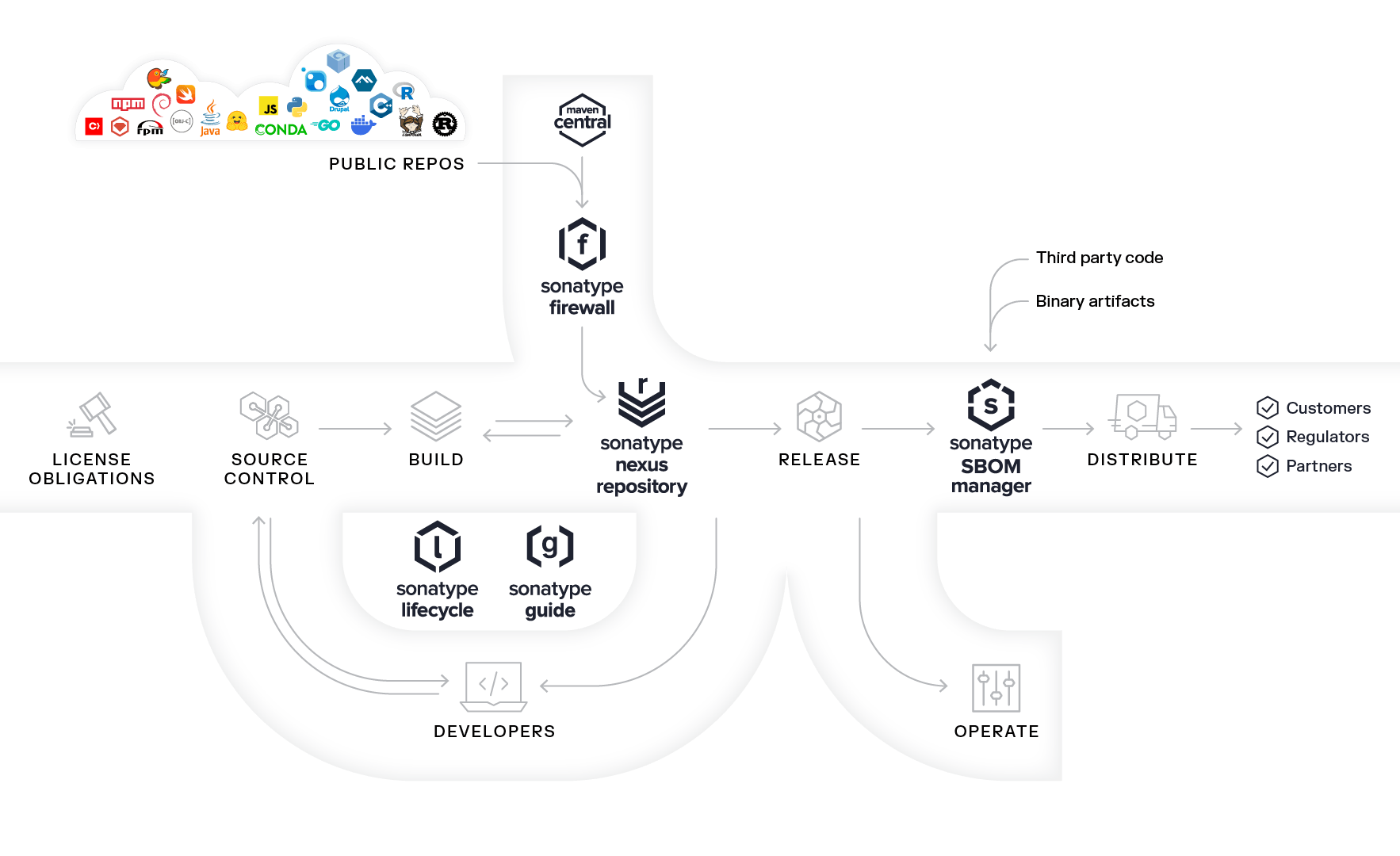
Accelerate automotive innovation while maintaining the highest standards for security and compliance. Sonatype’s Nexus One platform helps organizations securely scale software delivery by bringing together artifact management, open source governance, risk detection, policy enforcement, and vulnerability remediation. The result is faster automotive software development, stronger release confidence, and reduced risk across the SDLC.

Sonatype-SDLC-Platform-2026

Address Key Challenges Facing Software Development in the Automotive Industry

Vehicle Complexity is Growing

Modern vehicles combine embedded systems, cloud-native services, supplier-delivered code, and OTA capabilities that legacy development processes are not built to manage.

AI is Accelerating Development and Risk

AI-assisted engineering is transforming automotive software development, but it also introduces new challenges around code trust, dependency integrity, and software governance.

Vehicle Innovation Depends on Dev Speed

Automotive leaders are no longer competing solely on vehicle performance. They’re competing on how quickly and securely they can develop, deliver, and continuously update software.

Software Supply Chain Resilience is Critical

As OEMs and suppliers become more interconnected, securing software supply chain resilience is essential to maintaining continuity, regulatory readiness, and customer trust.

Delivering Real Results to Companies Worldwide

Sonatype’s Nexus One Platform for Modern Automotive Software Development

Sonatype’s Nexus One platform helps automotive manufacturers unify software development, security, and governance across the entire software supply chain.

Accelerate Software-Defined Vehicle Delivery

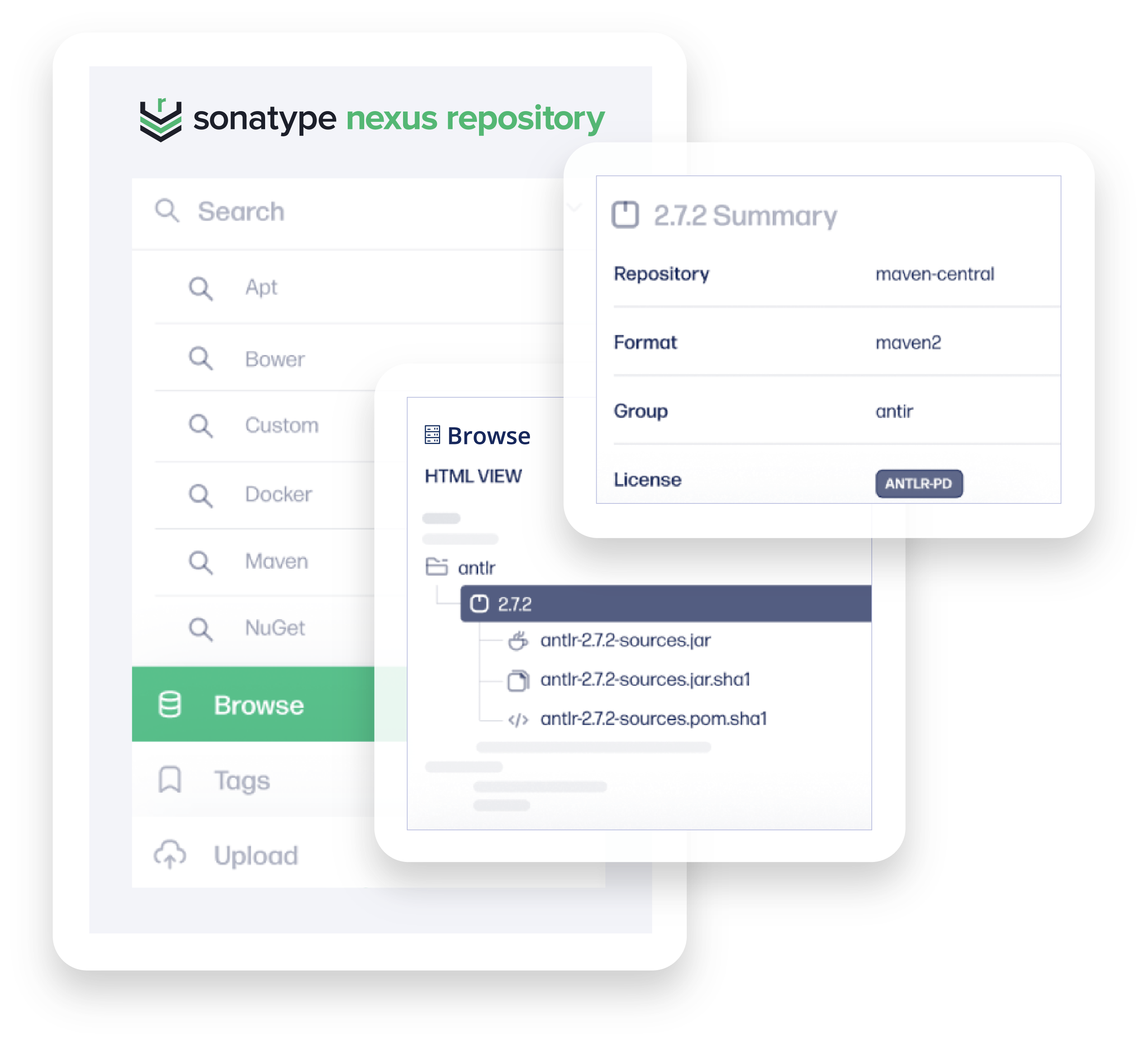
Centralize and manage software artifacts across distributed automotive development environments. Sonatype Nexus Repository provides a single source of truth for components, containers, models, and build artifacts across embedded, cloud-native, and enterprise development ecosystems.

Explore Nexus Repository about Accelerate Software-Defined Vehicle Delivery

Build with the Safest Artifacts Available

Build Using AI Guardrails

Identify and Fix Vulnerabilities Early

Prepare for Compliance Requirements

Browse functionality within Sonatype Nexus Repository
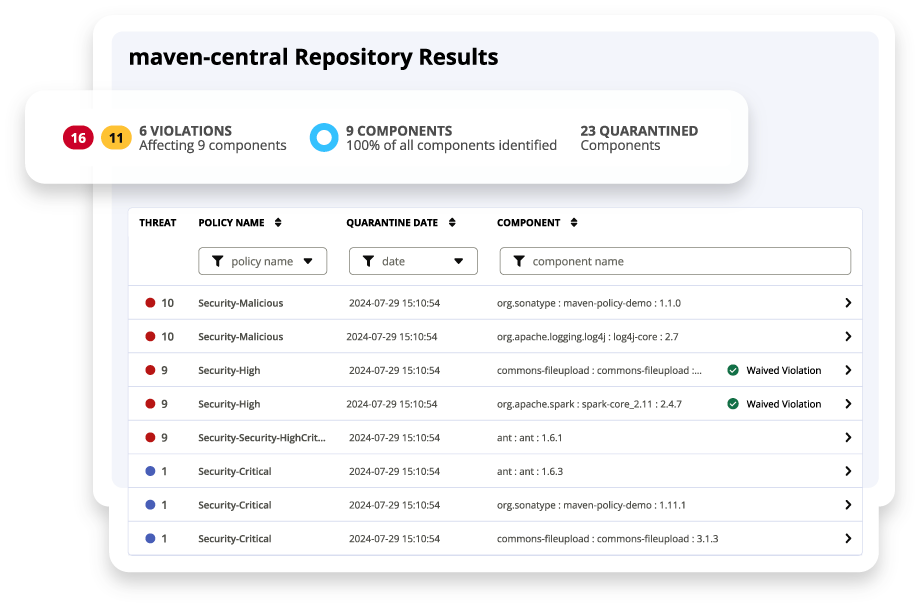
A global view of policy violations, quarantine date, and threat levels.
Expert guidance on component quality within your IDE.
Sonatype Lifecycle's automated golden pull requests
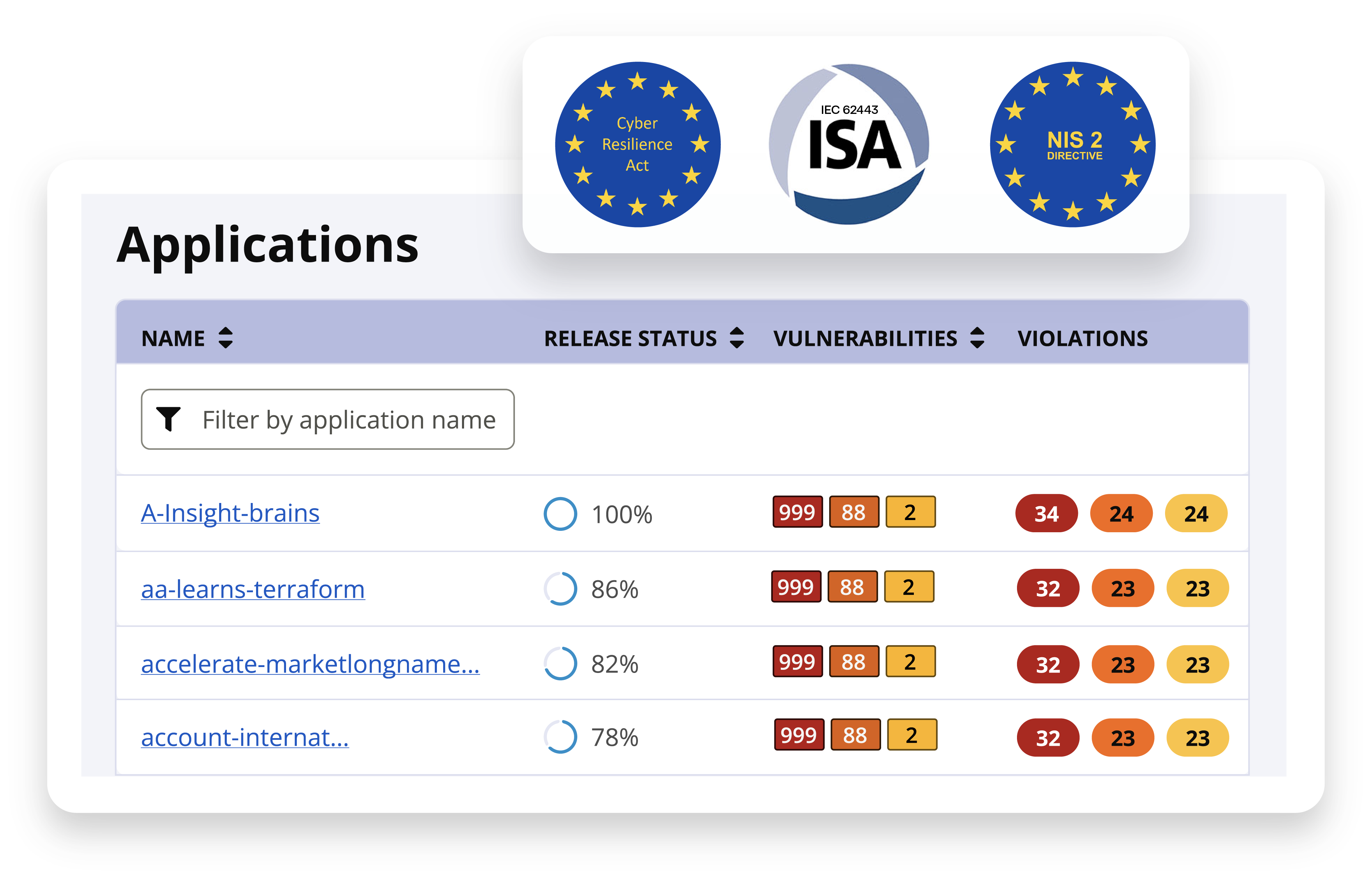
View of applications with violations to comply with global regulations.

Why Automotive Leaders Choose Sonatype

Unlike tools that only solve part of the problem, Sonatype helps automotive organizations manage the software supply chain end to end from artifact management and open source governance to AI guardrails, policy enforcement, and vulnerability remediation.

Developer-First Security

Embed security directly into developer workflows so developers can work faster without creating friction.

AI Governance

Secure both open source and AI-generated code across the software lifecycle.

End-to-End Visibility

Continuously monitor dependencies, risk, and software integrity across the SDLC.

Secure Releases at Scale

Automate governance and remediation to accelerate automotive software development.

Trusted Open Source Intelligence

Leverage industry-leading vulnerability and component intelligence to make safer development decisions faster.

Software Supply Chain Resilience

Strengthen software integrity across OEMs and supplier environments with centralized policy enforcement.

Book Your Tailored Session

glyph branded arrow
Sign Up Today

Frequently Asked Questions

How does Sonatype support software development in the automotive industry?

Modern vehicles are software platforms on wheels. That means automotive companies are now managing massive software supply chains made up of open source components, third-party dependencies, internally developed code, and increasingly, AI-generated code.

Sonatype helps automotive manufacturers and suppliers build software faster without losing control of security, quality, or compliance along the way. The Sonatype Nexus One platform gives teams visibility into the components flowing through their development pipelines, helps prevent vulnerable or malicious code from entering production, and automates governance in ways that support developers instead of slowing them down.

What challenges do automotive companies face in software development?

Automotive software development has become incredibly complex. Vehicles now depend on connected services, over-the-air updates, embedded systems, cloud-native platforms, and software coming from dozens or even hundreds of suppliers.

At the same time, engineering teams are under pressure to move faster. That creates tension. Every new dependency, supplier, AI-generated recommendation, or connected feature can introduce security, operational, or compliance risk. And unlike traditional enterprise software, failures in automotive systems can have real-world safety implications.

Most organizations are trying to answer a few difficult questions at scale:

  • Do we know what’s actually in our software?
  • Are the components we’re using trustworthy?
  • Can we respond quickly when vulnerabilities emerge?
  • How do we maintain developer velocity without turning security into a bottleneck?

That’s where software supply chain management becomes foundational, not optional.

How can automotive companies adopt AI safely in their software development processes?

AI can dramatically improve developer productivity, but AI-generated code and package recommendations are only as trustworthy as the data and components behind them. The real risk isn’t just bad code generation. It’s developers or AI agents unknowingly introducing vulnerable, malicious, or low-quality components into critical systems.

Sonatype helps automotive teams put guardrails around AI-assisted development without killing the productivity benefits that make AI valuable in the first place. With Sonatype Guide and our MCP Server, developers and AI agents can work from trusted component intelligence directly inside their workflows. Teams can validate recommended packages, enforce policy automatically, identify risky dependencies early, and receive safer upgrade guidance before software reaches production. The idea is not to slow developers down with more gates and approvals. It’s to make the safest path also the easiest path.

What are the benefits of using open source software in automotive development?

Open source software has fundamentally changed how modern vehicles are built. It allows automotive teams to move faster by building on proven frameworks, libraries, and platforms instead of reinventing everything internally. That acceleration matters when software now drives everything from infotainment systems to connected vehicle services to autonomous and AI-assisted capabilities.

Open source also gives organizations flexibility. Teams can innovate faster, integrate modern tooling more easily, and deliver new digital experiences continuously instead of waiting for traditional vehicle release cycles. The reality is that modern automotive development would not exist at its current pace without open source.

What are the key challenges in implementing open source software in vehicles?

The same thing that makes open source powerful also creates risk: scale. Modern applications can contain thousands of transitive dependencies, many pulled in indirectly. Most organizations don’t just struggle to secure them, they struggle to even see them clearly across suppliers, development teams, and build pipelines.

Automotive companies also face growing pressure around cybersecurity regulations, SBOM requirements, and supply chain transparency. And attackers increasingly target the software supply chain itself because it scales efficiently for them.

Sonatype’s automotive software development solutions help organizations address those challenges by giving teams visibility into what they’re using, intelligence about component risk, and automated controls that catch problems earlier in the development lifecycle. That includes identifying vulnerable or malicious components, enforcing policy consistently, improving upgrade decisions, and helping developers make safer choices without adding unnecessary friction to engineering workflows.

How does Sonatype integrate into automotive DevSecOps workflows?

Sonatype integrates directly into the tools developers already use, including repositories, IDEs, CI/CD pipelines, pull request workflows, artifact managers, and security systems. The philosophy has always been that security works best when it becomes part of the development workflow instead of sitting outside it as a separate approval process.

Rather than forcing teams through heavy gates at the end of development, Sonatype helps organizations provide developers with timely, actionable feedback while code is still being written and dependencies are still being selected. That allows automotive engineering teams to continuously manage software supply chain risk while still maintaining the speed and agility modern vehicle software development requires.