
SONATYPE GUIDE AGENT P
Agentic Dependency Management is Here
Meet Agent P, Sonatype’s dependency management agent. Powered by Sonatype Intelligence, Agent P helps AI coding assistants choose better dependencies, automate updates, validate changes, and reduce the manual work developers spend fixing open source risk.
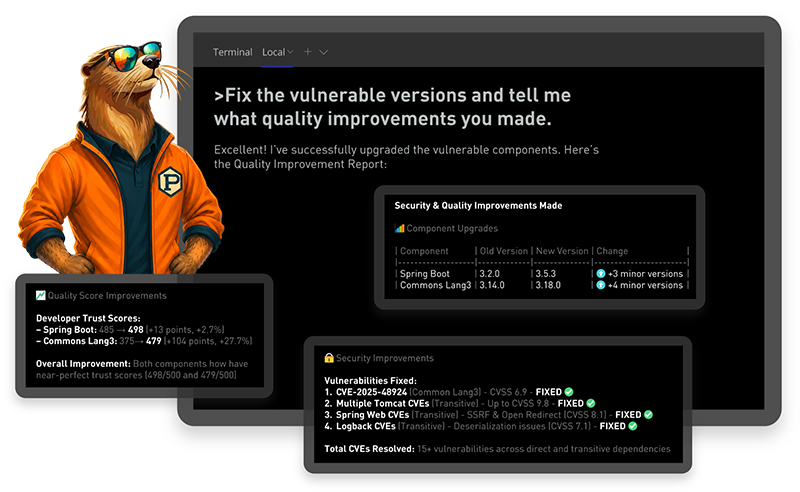
What Happens When an AI Coding Assistant Picks Your Dependencies?
AI coding assistants lack the dependency context they need. Sonatype Agent P helps developers and AI assistants choose better open source components, then autonomously updates and validates them so developers spend less time on dependency maintenance.
Without Guide
Ungrounded AI agent recommendations
With Sonatype Guide
AI grounded by Sonatype intelligence
Your Agent Needs an Agent
Getting Started with Sonatype Guide Agent P
1.
Guide Better Choices
Agent P gives AI coding assistants real-time Sonatype intelligence so they can recommend safer, higher-quality dependencies and versions.
2.
Automate Update Work
When dependencies need to change, Agent P helps apply updates and prepare remediation work instead of leaving every fix to developers.
3.
Validate Before Review
Agent P helps test and validate dependency changes so developers receive fixes that are easier to trust and faster to review.
4.
Update Dependencies
Agent P supports continuous autonomous dependency management, helping teams reduce dependency drift, rework, and maintenance burden over time.
Related Resources
Get Started with Agent P
Frequently Asked Questions
How does Agent P work?
Agent P works through Sonatype Guide MCP Server to bring trusted dependency intelligence and automation directly into the AI coding assistants developers already use. It helps select the best dependency versions, applies updates, validates changes, and continuously maintains dependencies so developers can stay focused on building software.
How is Agent P different from traditional dependency management tools?
Traditional dependency management tools tell developers what to upgrade. Agent P goes further by using Sonatype's industry-leading software supply chain intelligence to autonomously upgrade dependencies, validate compatibility, and help resolve breaking changes.
Why is Agent P better than simply asking my AI assistant to upgrade a dependency?
AI coding assistants can suggest dependency updates, but they often rely on outdated training data. Agent P grounds AI with Sonatype's real-time software supply chain intelligence, allowing it to choose better upgrade paths, validate compatibility, and help resolve breaking changes automatically.
Can Agent P automatically fix dependency updates?
Yes. Agent P can autonomously apply dependency updates, validate the changes, and, in many cases, resolve breaking changes before developers review the pull request.
How can I trust Agent P to make dependency changes?
Agent P is powered by Sonatype's industry-leading software supply chain intelligence. Before making updates, it evaluates recommended versions, validates compatibility, and helps identify breaking changes so developers can review and approve changes with greater confidence.
Does Agent P work with my existing development workflow?
Yes. Agent P integrates with AI coding assistants through the Sonatype Guide MCP Server, bringing autonomous dependency management into the tools developers already use.
How do I get started with Agent P?
Getting started is simple. Connect your AI coding assistant to the Sonatype Guide MCP Server, enable Agent P, and begin using autonomous dependency management within your existing development workflow.