SONATYPE SOLUTIONS

Dependency Management Tools for AI-Speed Development

Streamline agentic development with Sonatype’s automated dependency management tools that deliver zero-effort fixes, risk prioritization, and actionable remediation guidance.

Automatically Fix Hidden Risks in Your Dependencies

Managing open source dependencies is critical to software security and stability, yet it can be complex and time-consuming. Sonatype streamlines the process by automatically identifying, prioritizing, and remediating vulnerabilities. The Nexus One Platform reduces manual overhead and empowers developers to focus on building innovative features instead of chasing down bugs.

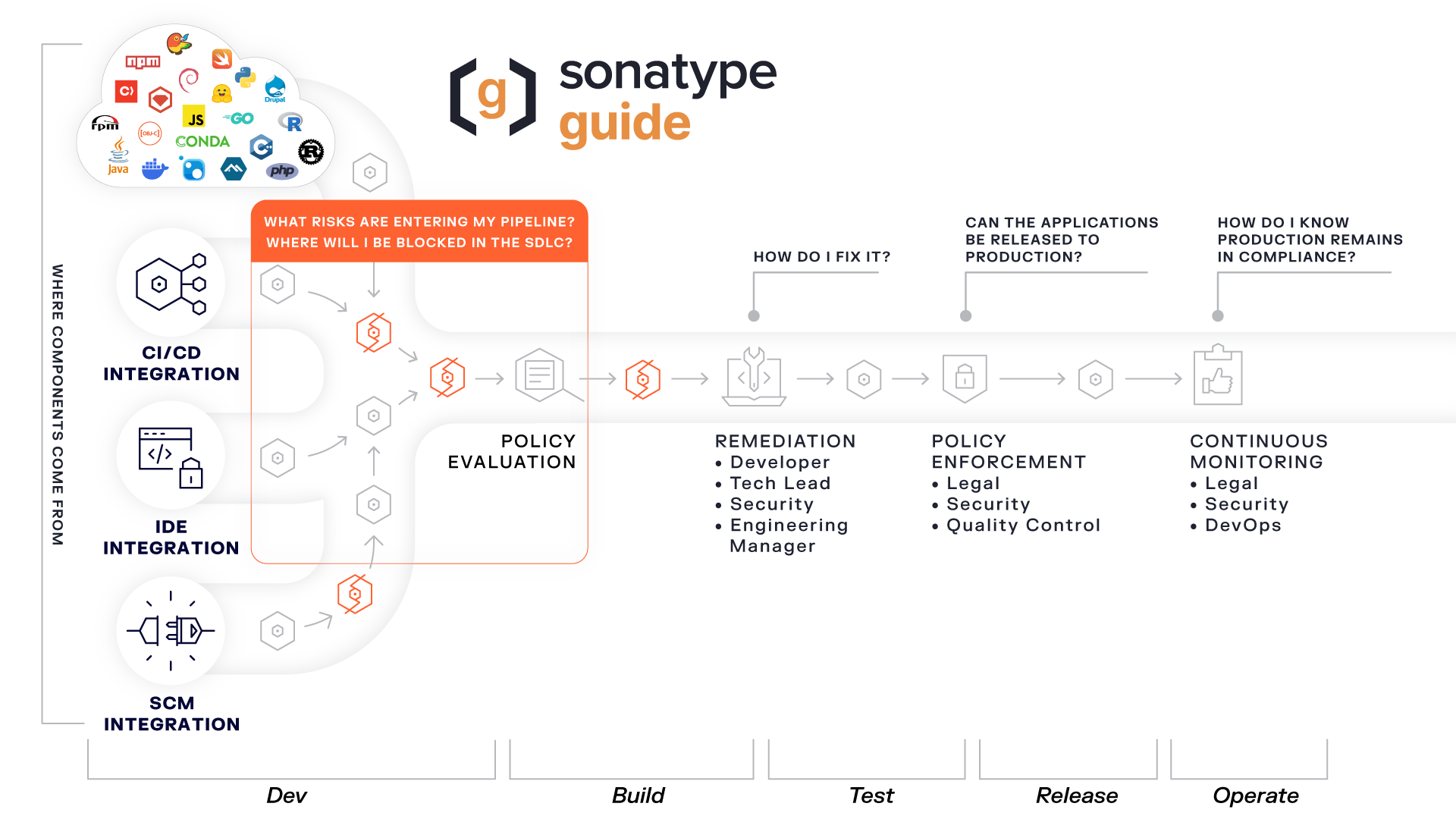
Workflow of managing open source risk with Sonatype Lifecycle

Take Control with Automated Dependency Management Tools

Whether you're writing code or using an AI agent, Sonatype automates dependency analysis and remediation to reduce manual effort and keep software secure.

Sonatype Lifecycle's automated golden pull requests
Sonatype Guide fixes vulnerable versions and displays its quality improvement report.
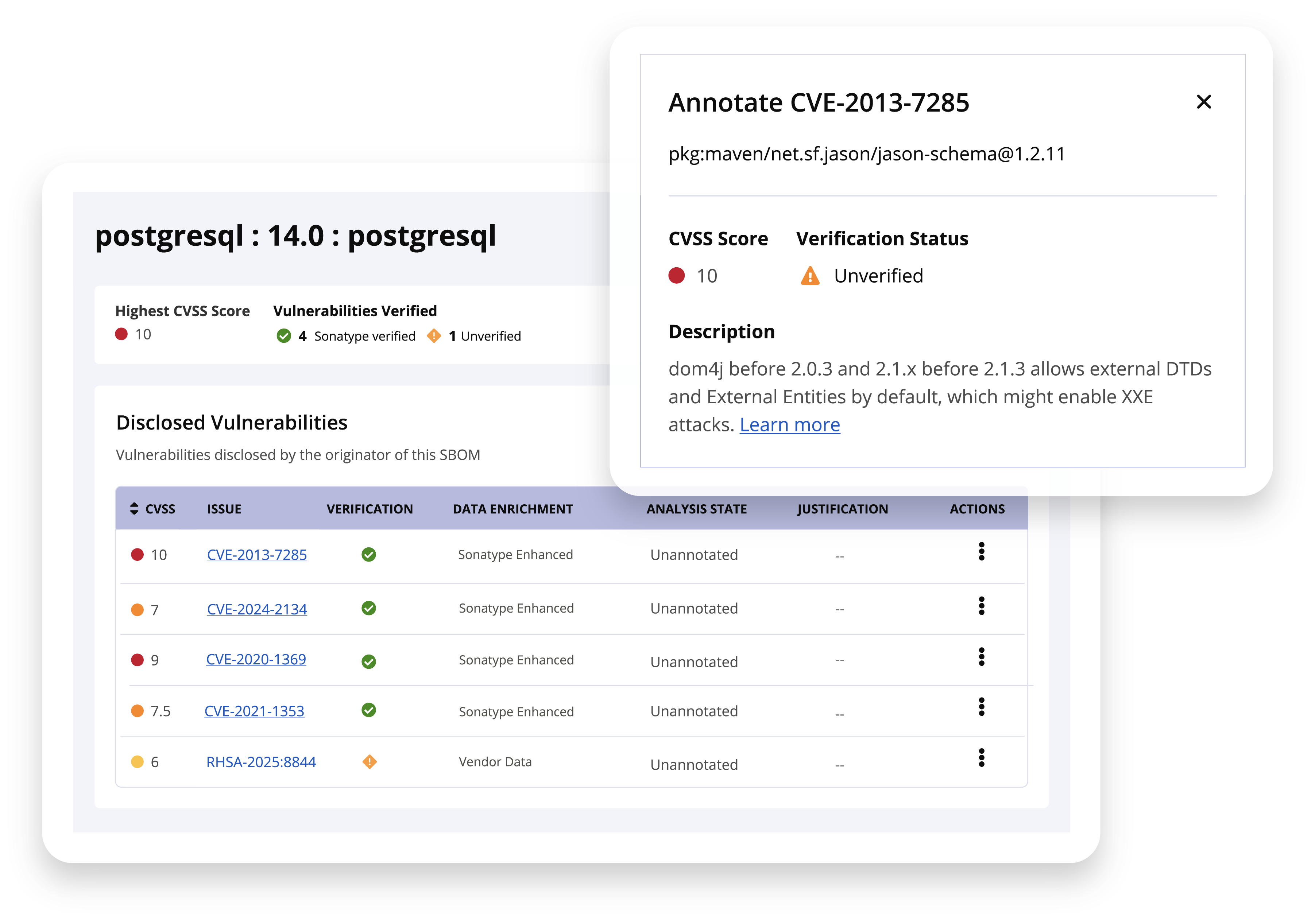
SBOM Manager's insights into disclosed vulnerabilities with annotation information.
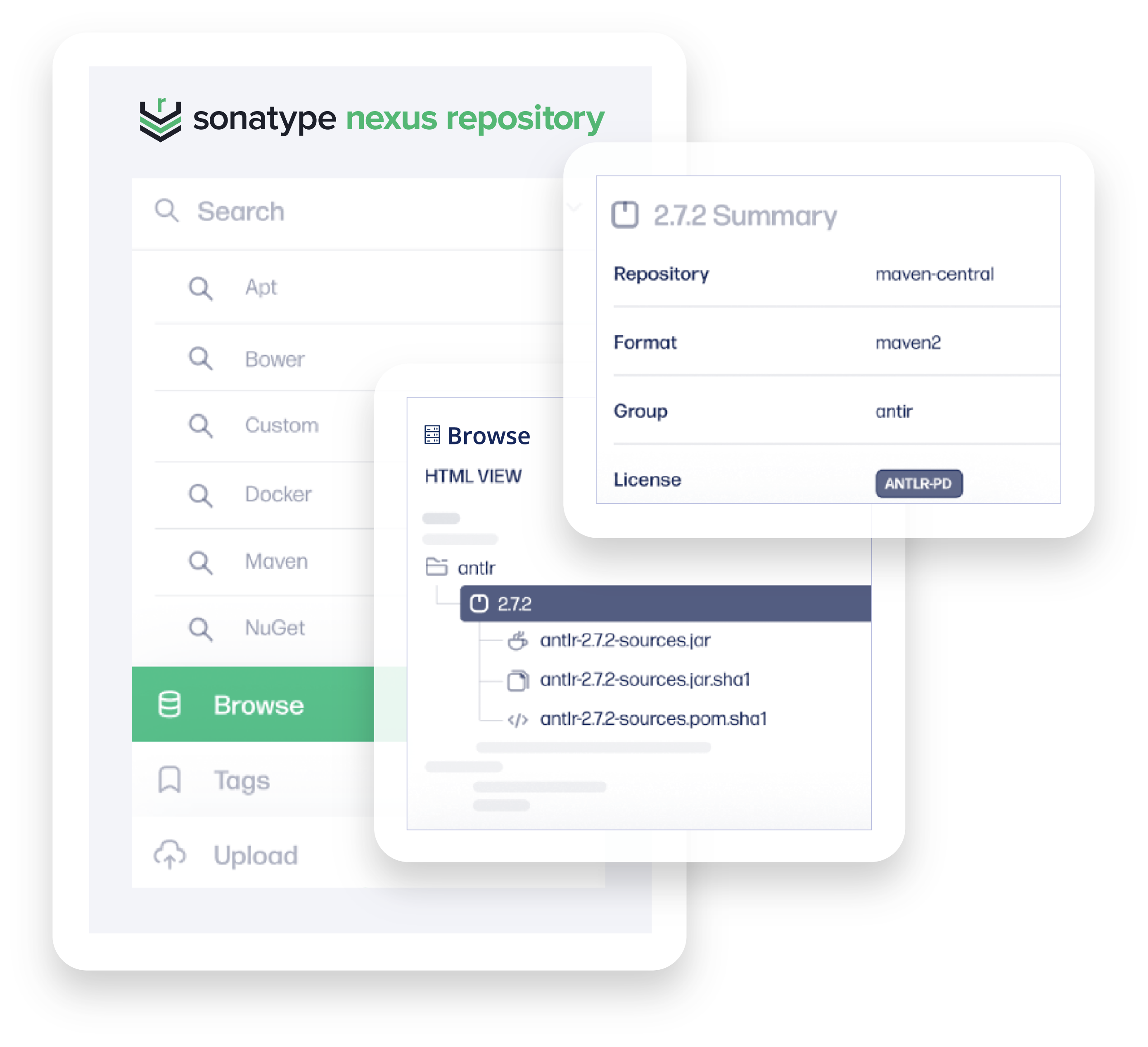
Nexus Repository browsing with full summary of artifact details and history.

Get Complete Visibility into Every Dependency with Sonatype

Sonatype is the superior choice for dependency management, combining precision security, automated governance, open source intelligence, and unmatched visibility to safeguard your software supply chain without slowing innovation.
0
+
hours saved per upgrade with golden pull requests
0
%
Increase in fix rate with best-in-class dependency management
0
%
Faster mean time to remediate (MTTR)

Dependency Management That Doesn’t Slow You Down

Sonatype automates the management of software dependencies, allowing development teams to move fast without sacrificing visibility, control, or software integrity.

Faster Dev Cycles

Automate dependency updates and minimize disruptions to your development workflow.

Less Noise, More Action

Prioritize risk with powerful intelligence and context to focus on dependencies that require attention.

Improved Compliance

Enforce open source license policies and avoid legal or regulatory violations.

Increased Visibility

Gain real-time insights into every component used across your applications.

Reduced Tech Debt

Proactively manage outdated libraries and prevent the accumulation of risky code.

AI Confidence

Ensure your AI builds are using the highest-quality components and versions.

Why Enterprises Trust Sonatype

“Using Sonatype, we’re able to identify risks earlier than ever before in the development process — especially compared to six months ago. Sonatype solutions work very well within our DevOps practice.”

Prem Ranganath

VP of Quality and Risk Management

Trilliant
Read Case Study

“We evaluated Black Duck, Veracode and Sonatype. My colleagues and I chose Sonatype because it is the best user interface for what we are trying to do: remove all critical findings before they reach production.”

LARS BRÖSSLER

Senior Software Developer

Endress+Hauser
Read Case Study

“Automated monitoring is the primary reason we chose Sonatype. It alleviates the time-consuming manual processes that inhibit scaling. We want to be able to have our eyes on the code and have Sonatype tell us when there’s something requiring our attention.”

David Blevins

CEO

Tomitribe
Read Case Study

Frequently Asked Questions

What is dependency management?

Dependency management is the practice of overseeing and coordinating the external libraries, frameworks, and modules that a project relies on to function correctly. As software supply chains grow increasingly complex, dependency management becomes essential for building stable applications, reducing technical debt, and ensuring compliance. Effective dependency management tools help developers track, resolve, and maintain dependent components to ensure that applications run smoothly and securely across environments.

What are software dependencies?

Software dependencies are external libraries or components your application relies on to function. These can be open source or proprietary and are essential for building features efficiently. Sonatype helps manage these dependencies through tools like Sonatype Guide and Sonatype Nexus Repository, ensuring secure and traceable usage across your development pipeline.

What is agentic dependency management?

Agentic dependency management applies trusted component intelligence, policy controls, and automated remediation to AI-driven development workflows. It helps ensure that coding agents do not simply choose the first available package or version, but instead receive guidance on safer, current, policy-compliant dependencies. Sonatype Guide seamlessly integrates with your AI agents to ensure every package choice is secure, current, and optimized for performance. It continuously analyzes open source components, provides real-time recommendations, and automatically manages updates to reduce technical debt.

Why is dependency management more important in the age of Mythos?

Mythos and other AI-powered tools accelerate zero-day discovery and exploit creation, which can compress the time between a vulnerability being found and being used in an attack. Manual dependency reviews and delayed remediation processes cannot reliably keep pace. Teams need continuous monitoring, policy enforcement, intelligent prioritization, and automation that can respond as risk changes.

What is the difference between a direct and transitive dependency?

A direct dependency is one that your application explicitly includes, while a transitive dependency (or indirect dependency) is pulled in indirectly by those direct dependencies. Sonatype Guide provides full visibility into both types, helping teams assess risk across their entire dependency tree.

How do I handle software dependencies effectively in large codebases?

Use a centralized process to identify approved dependencies, monitor them for new risk, enforce consistent policies, and automate updates when issues arise. Sonatype Guide gives teams visibility across applications and helps developers prioritize and remediate the dependencies that need attention without adding manual review delays.

What are best practices for managing transitive dependencies to not slow down development cycles?

Best practices for managing transitive dependencies include continuous monitoring, vulnerability scanning, and establishing governance policies. With Sonatype Guide, organizations can automatically identify outdated or vulnerable transitive dependencies and apply automated pull requests that not only remove direct risk but all transitive risk as well — all without slowing down development.

Are there any automation capabilities to manage open source dependencies?

Yes, Sonatype Guide offers automated pull requests — also known as golden pull requests — that upgrade components to safe versions without breaking builds and safely remove all transitive risk. This automation saves developers hours of manual work per upgrade while improving security and component hygiene.

What is a software dependency tree?

A software dependency tree maps the relationship between an application’s direct and transitive dependencies. This structure helps identify the root cause of vulnerabilities, resolve version conflicts efficiently, and make informed decisions about upgrades. With Sonatype tools, this visibility supports faster troubleshooting and more secure, reliable builds.

What dependency risk exists in AI builds?

AI coding assistants introduce new dependency risks because their confidence doesn’t always equal correctness. When AI is confident, it is 98% accurate. However, AI is only confident 4% of the time when selecting safe, high-quality components. That means most of the dependencies AI suggests are chosen without sufficient assurance of security, license compliance, or long-term stability. Without intelligent dependency management, these AI-generated builds can quickly accumulate hidden vulnerabilities, outdated packages, and licensing risks undermining the very speed and efficiency AI promisses to deliver. Sonatype Guide offers best-in-class intelligence to guide AI coding assistants to use the safest, most up-to-date versions available.

Control Your Risk

Book a Demo