
SONATYPE SOLUTIONS
Automated Software Supply Chain Security to Address Risk Fast
Deliver innovation at scale with a secure software supply chain — no compromises, no slowdowns.
True Innovation Isn’t Just Fast, It’s Secure.
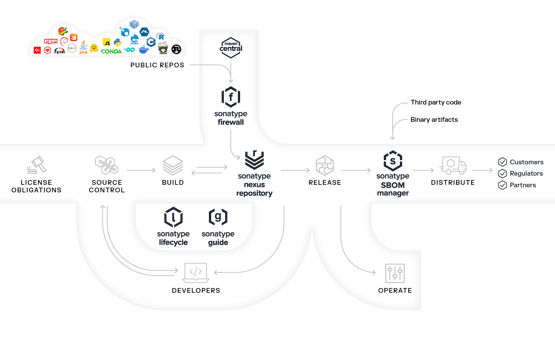
Innovation fuels growth, but it also opens the door to evolving threats. Just as open source once propelled rapid innovation, AI is now driving a similar transformation while introducing new risks. Organizations must invest in software supply chain security to gain visibility and control over what’s in their applications. With powerful automation capabilities, Sonatype's software supply chain management platform can help you govern OSS and AI usage effectively.
Explore Advanced Tools for Software Supply Chain Security from Sonatype
Securely Manage Components
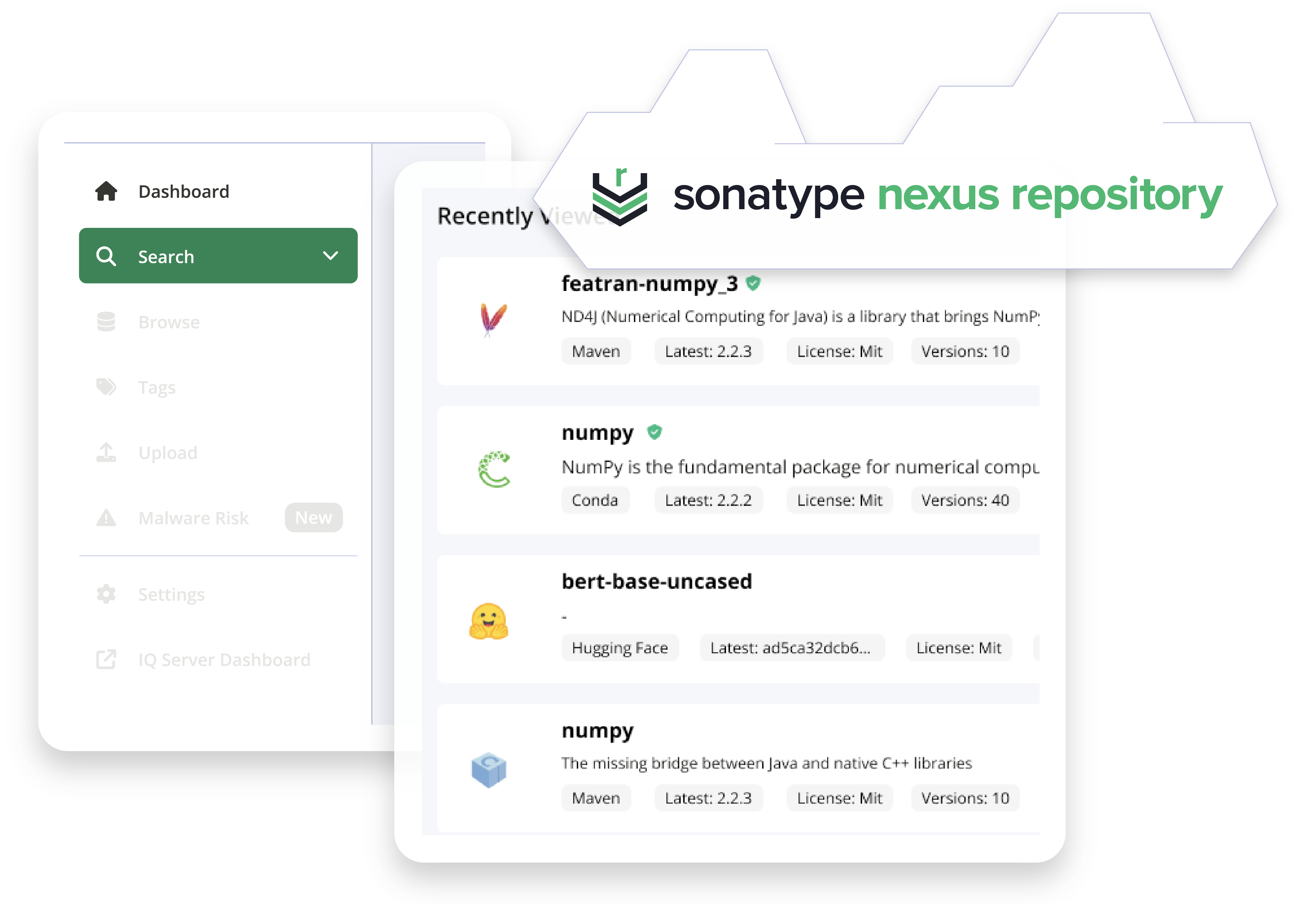
Sonatype Nexus Repository provides a centralized platform for artifact storage and control. It ensures integrity through component scanning, access control, and repository health checks. Managing open source and proprietary dependencies prevents the use of vulnerable components and strengthens software supply chain security by enabling traceability, consistent governance, and reliable delivery of trusted artifacts throughout the development lifecycle.
Block Malicious Components
Sonatype Firewall proactively inspects incoming open source components and AI models, identifying and halting those with known vulnerabilities or malicious code before they reach development environments. By screening artifacts at the perimeter, it ensures only trusted code is used, reducing exposure to threats and securing the software supply chain. This early intervention protects organizations from downstream risks and enforces higher standards for open source hygiene and dependency management.
Identify and Fix Vulnerabilities Early
Sonatype Lifecycle makes it possible for development teams to proactively detect and remediate vulnerable or noncompliant components or models during the build process. By continuously evaluating open source dependencies against an extensive intelligence database, it ensures that only safe, compliant code enters production. This streamlined approach minimizes software supply chain risks and supports regulatory adherence, allowing organizations to innovate confidently while maintaining high standards of quality and security.
Gain Full Visibility with SBOMs
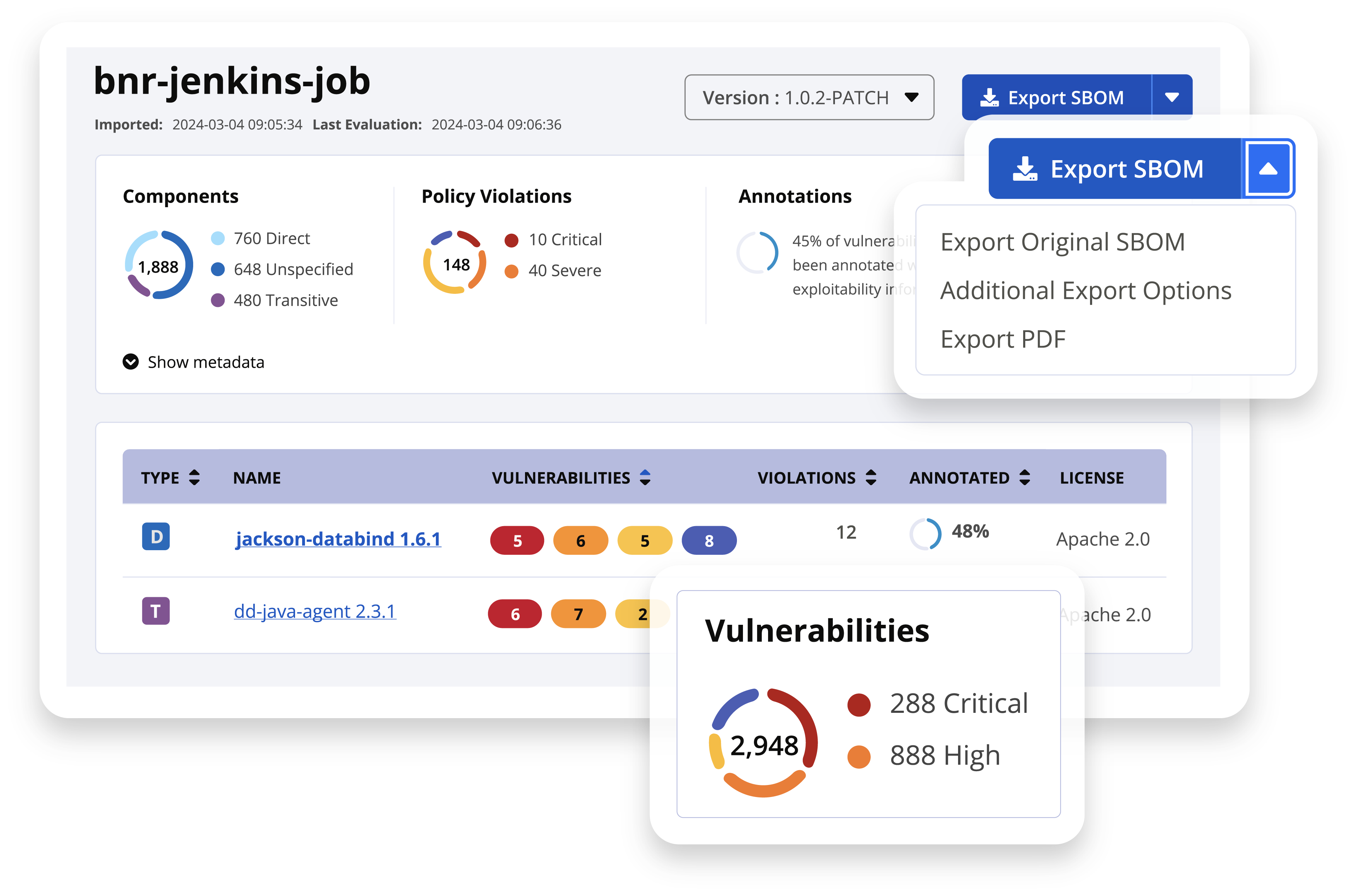
Sonatype SBOM Manager enhances software supply chain security by offering detailed insight into application components, their origins, and dependencies. It enables organizations to track what’s inside their software and AI applications, monitor changes, and identify potential risks. With centralized oversight and seamless integration into development workflows, it empowers teams to make informed decisions, respond swiftly to threats, and maintain continuous assurance across the entire software ecosystem.


Proven Results. Unmatched Software Supply Chain Security.

The Benefits of Software Supply Chain Management and Security with Sonatype
Improved Response Times
Rapid detection and remediation of open source vulnerabilities with fewer false positives.
Automated Policy Enforcement
Automate security reviews with prioritization, freeing developers to focus on innovation.
Faster Remediation Time
Fix vulnerabilities or policy violations fast with automated Golden Pull Requests.
Regulatory Compliance
Reduce time spent meeting compliance standards like NIST, FedRAMP, and CRA.
Improved Productivity
Choose the best components from the start and eliminate rework later in the SDLC.
Faster Releases
Increase engineering velocity while improving release quality with solutions that lower risk.

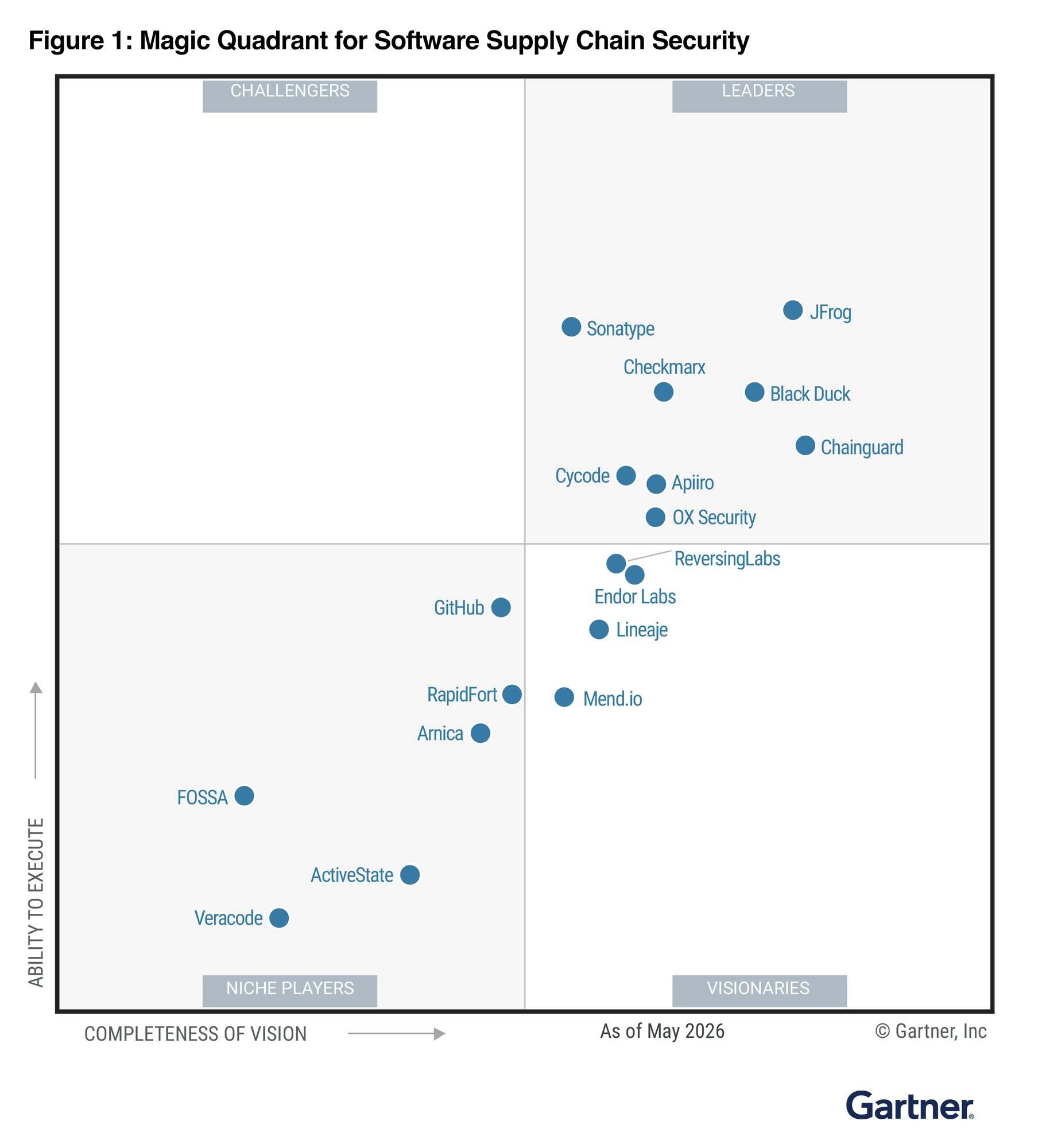
Sonatype Named a Leader in the 2026 Gartner® Magic Quadrant™ for Software Supply Chain Security
We’re proud to announce that Gartner has recognized Sonatype as a Leader in the 2026 Gartner® Magic Quadrant™ for Software Supply Chain Security, evaluating vendors helping organizations secure software across open source, AI-generated code, dependencies, and software supply chains.
Explore Software Supply Chain Management Insights & Resources
Frequently Asked Questions
What is software supply chain security?
Software supply chain security is the practice of protecting all components, processes, and stakeholders involved in developing and delivering software. At Sonatype, we view it as securing every stage — from dependencies to deployment — against open source malware, vulnerabilities, and tampering. The most effective software supply chain security strategies focus on ensuring trust, integrity, and compliance across the software development life cycle (SDLC) to prevent breaches before they happen.
Why are software supply chain attacks trending?
Today’s applications are built from hundreds or thousands of dependencies sourced from public repositories and vendors. While open source accelerates innovation, it also introduces significant software supply chain risks. Attackers can compromise a single library, package, or build tool and impact every organization that depends on it.
At the same time, many organizations lack mature software supply chain management practices. Outdated dependencies, unverified components, and limited visibility into what’s actually running in production make it difficult to identify and respond to threats. Attackers take advantage of this gap, targeting trusted components and update mechanisms to bypass traditional security controls.
The rise of automation, CI/CD pipelines, and cloud-native development has further increased the scale and speed of attacks, allowing malicious code to spread faster than ever before. Without proactive software supply chain risk management, these threats can remain undetected deep into production environments.
What role does software supply chain management have in cybersecurity?
Software supply chain management gives organizations the visibility, control, and automation needed to reduce software supply chain risks across the entire development life cycle. Without effective software supply chain management, organizations struggle to understand what code they are using, where it came from, and whether it can be trusted — leaving attackers ample opportunity to exploit hidden weaknesses.
A secure software supply chain depends on managing and protecting every stage of software creation and delivery. Key components include code integrity, strong dependency management, and strict access control to ensure only trusted code and contributors are allowed into builds. Secure build processes, signed artifacts, and reliable automation help prevent tampering and ensure software hasn’t been altered between development and deployment.
Equally important are continuous monitoring, vulnerability scanning, and SBOM management, which provide traceability into all components and dependencies. These capabilities allow teams to quickly identify vulnerable or malicious components, respond to emerging threats, and maintain compliance. Together, they form the backbone of effective software supply chain risk management, enabling early threat detection rather than reactive incident response.
What are the most common software supply chain security risks?
The most common risks in securing the software supply chain include compromised or malicious third-party components and AI models, lack of visibility into dependencies, unpatched vulnerabilities, complacent consumption choices, and insecure CI/CD pipelines. Attackers exploit these weak points to inject malware, steal data, or disrupt services. Robust monitoring and verification are essential for mitigation.
How does automated security scanning help mitigate software supply chain risks?
Automated security scanning helps mitigate software supply chain risks by continuously detecting vulnerabilities, misconfigurations, and threats in code, applications, and infrastructure. It enables faster remediation, reduces human error, ensures compliance, and provides real-time insights — helping organizations establish a secure software supply chain.
What role do binary artifact repositories play in software supply chain management?
Binary artifact repositories provide a central, controlled location to store, manage, and verify software components, which is an important aspect of securing the software supply chain. They ensure integrity through checksums, support access control, and enable traceability, helping prevent the use of malicious or tampered dependencies in builds and deployments.
How does software supply chain security integrate with CI/CD pipelines?
Software supply chain security integrates with CI/CD pipelines by embedding security checks at each stage — scanning dependencies, verifying code integrity, and using signed artifacts. Sonatype integrates with CI/CD tools (e.g., Jenkins, GitHub Actions) to ensure secure, compliant artifacts are used from development through deployment.
How can AI and machine learning enhance software supply chain security?
AI and machine learning can help secure software supply chains by analyzing vast open source data to detect vulnerabilities, malicious code, and risky components in real time. Sonatype uses AI to automate threat detection and enforce secure coding practices, reducing human error and accelerating secure software delivery.
Why is software supply chain security needed?
Software supply chains are increasingly vulnerable due to the growing prevalence of open source malware, unchecked dependency risks, and persistent vulnerabilities. According to Sonatype's State of the Software Supply Chain Report, malicious open source packages are rising fast, with a 156% YOY spike and over 828K threats. Traditional security tools can't detect many novel attacks. Developers face risks from protestware, ransomware, and software supply chain breaches like the Snowflake incident. Having a comprehensive solution for software supply chain management and security can help organizations mitigate their risk and manage open source more effectively.
Build Secure. Ship Confidently.