
SONATYPE SOLUTIONS
Vulnerability Management Made Easy
Eliminate software vulnerabilities fast with real-time intelligence, automated policy enforcement, and end-to-end integration across every stage of the development lifecycle.
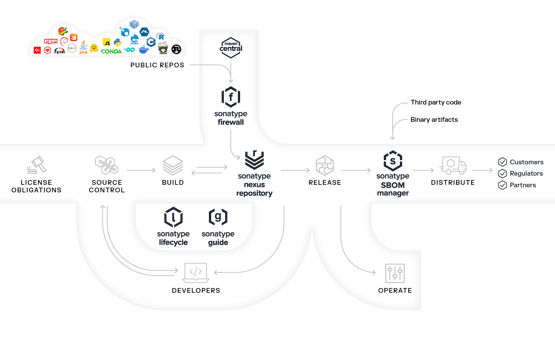
Ship Software Faster with Less Risk
Modern development teams rely on open source to build software faster, but with that speed comes risk. The average application includes roughly 13 new critical or high-severity vulnerabilities. Multiply that by the total number of your apps, and the issues add up.
Without proactive vulnerability management tools, risks can slip into production, causing security breaches, legal disputes, compliance failures, and costly incidents. Sonatype helps teams take control to mitigate risk.
Sonatype's Vulnerability Management Tools for Impenetrable Security
Advanced Vulnerability Management and Monitoring
Enhance vulnerability management by integrating continuous monitoring, automated remediation, and policy enforcement into the software development lifecycle. Sonatype Lifecycle identifies security vulnerabilities and provides actionable remediation guidance with risk-based prioritization based on severity and business impact, enabling teams to address issues proactively without slowing down innovation.
Intercept Malicious Code From Entering The SDLC
Sonatype Firewall proactively protects your software supply chain by blocking malicious open source components before they enter your repositories. Leveraging comprehensive malware intelligence and real-time behavioral analysis, it enforces security policies at the perimeter, quarantines suspicious artifacts, and integrates seamlessly with existing development workflows, ensuring only trusted components are used in your applications.
Centralized Management of Components
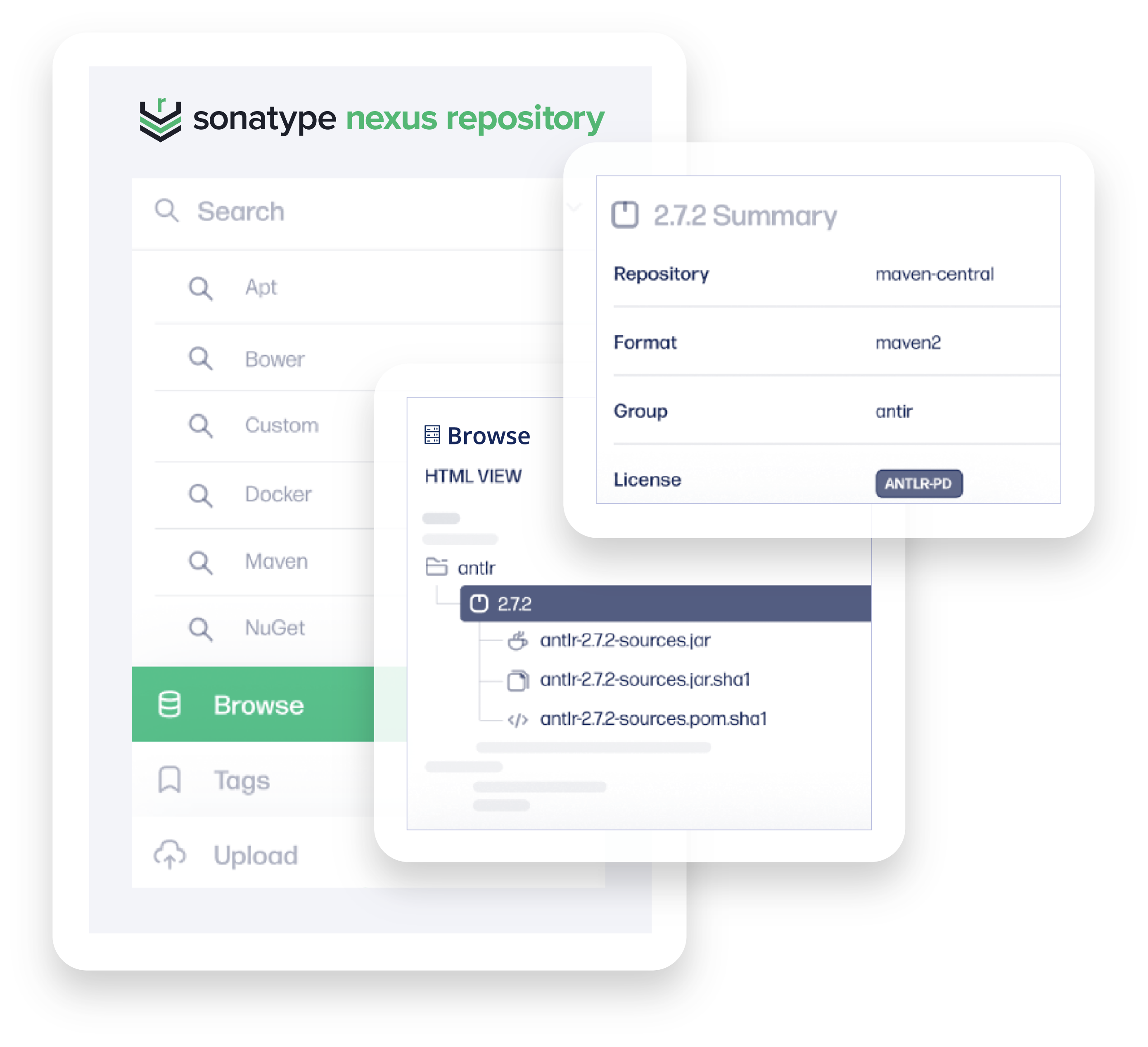
Sonatype Nexus Repository serves as a centralized platform for managing and distributing software components, ensuring that only approved and secure artifacts are used in development. By integrating with other Sonatype tools, it facilitates the enforcement of security policies, supports vulnerability scanning, and provides a single source of truth for all binaries, enhancing control over the software supply chain.
Automatically Monitor For New Security Vulnerabilities
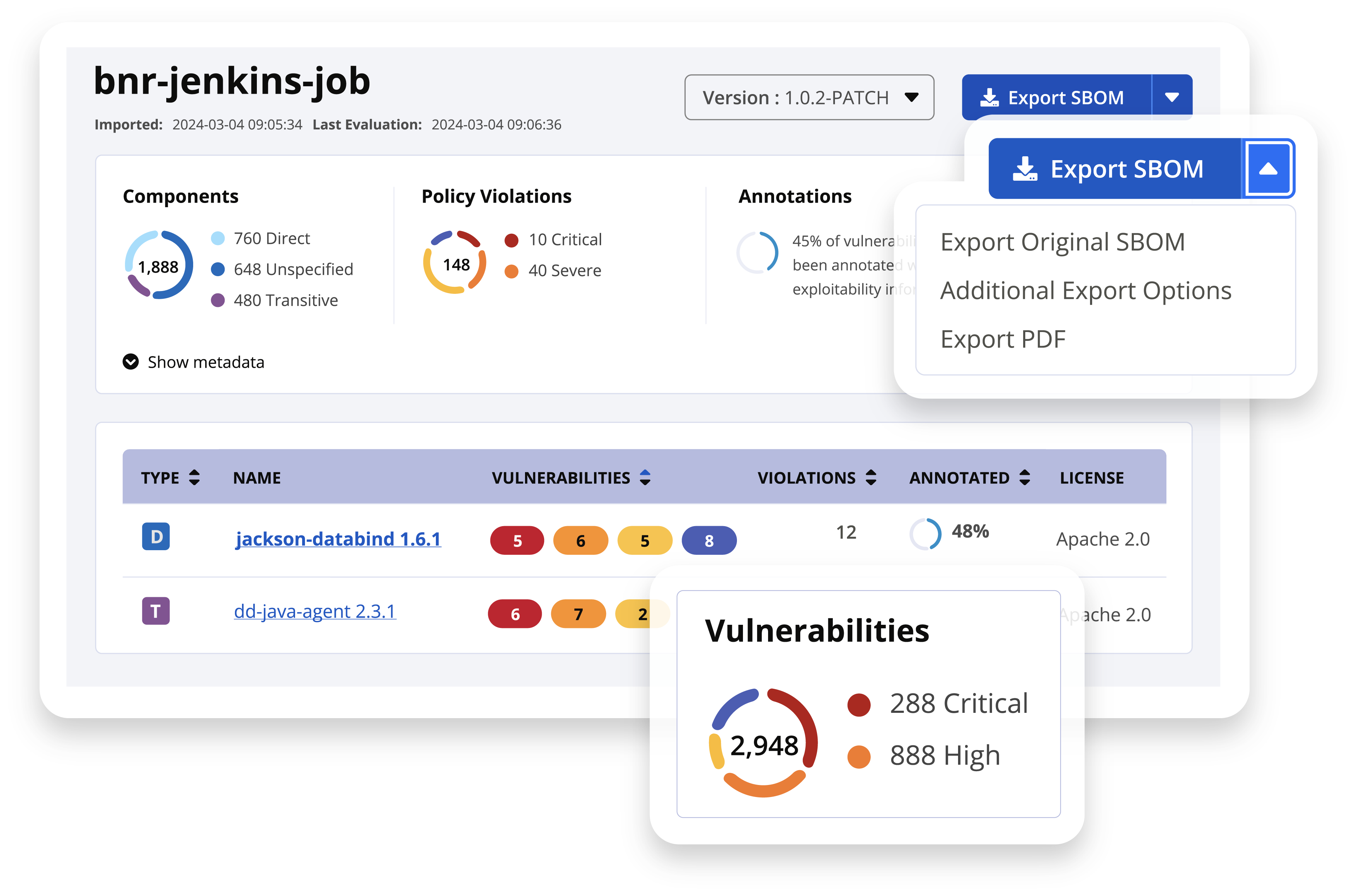
Streamline software vulnerability management by automating the creation, ingestion, and monitoring of SBOMs. Sonatype SBOM Manager supports compliance with global regulations, provides visibility into first and open source components, and integrates VEX (Vulnerability Exploitability eXchange) data to assess the exploitability of vulnerabilities, enabling organizations to manage software vulnerabilities effectively across their entire portfolio.


Results That Speak For Themselves
Sonatype is the go-to resource for software vulnerability management with a proven track record of open source security, industry-leading intelligence, and automated policy enforcement that lead to fast remediation.

End-to-End Vulnerability Management with Sonatype Lifecycle
Discover
Automatically scan components, leveraging advanced intelligence to detect vulnerabilities.
Assess
Gain rich insights and assess software risk with near-zero false positives and negatives.
Verify
Get context into your vulnerabilities with supporting risk justification and tracking.
Prioritize
Fix what matters most with risk-based prioritization leveraging exploitability data.
Remediate
Automate remediation and get precise guidance for anything that can’t be automated.
Report
Generate an SBOM report for every application and maintain governance across your SDLC.

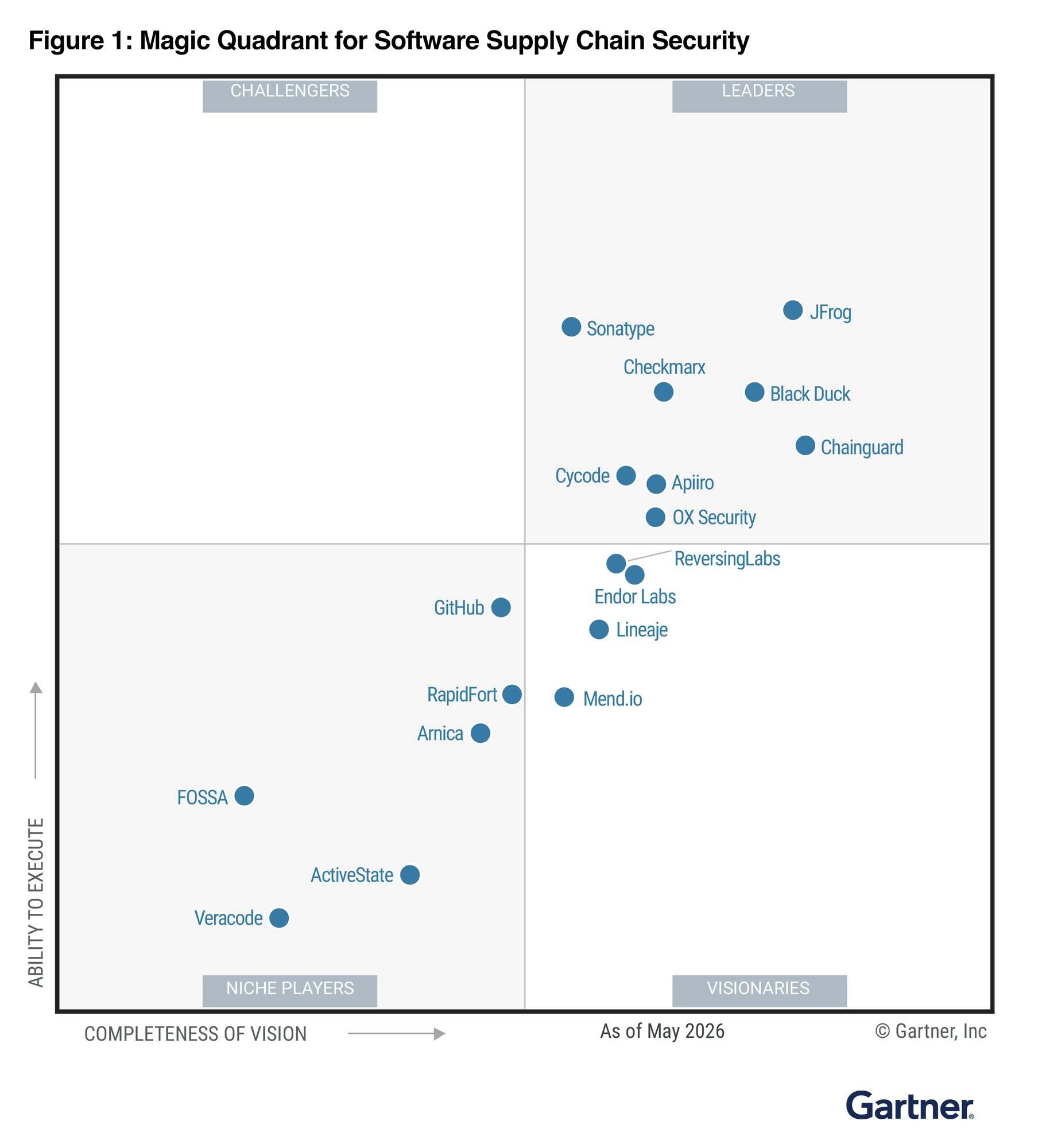
Sonatype Named a Leader in the 2026 Gartner® Magic Quadrant™ for Software Supply Chain Security
We’re proud to announce that Gartner has recognized Sonatype as a Leader in the 2026 Gartner® Magic Quadrant™ for Software Supply Chain Security, evaluating vendors helping organizations secure software across open source, AI-generated code, dependencies, and software supply chains.
Browse Resources
Frequently Asked Questions
What is the difference between a software vulnerability and malware?
A software vulnerability is a flaw or weakness in code that can be exploited by attackers, while malware is malicious software intentionally designed to harm systems. Vulnerabilities are unintentional and require prompt management to prevent exploitation. Learn more about open source vulnerabilities and how they differ from malicious threats like malware.
What's the difference between risk-based prioritization and contextual prioritization?
Risk-based prioritization focuses solely on the severity of security threats, while contextual prioritization also considers factors like application criticality, exploitability, and business impact. Sonatype emphasizes contextual prioritization to help teams make smarter decisions, not just addressing security risk.
How does vulnerability management tools address vulnerabilities in transitive dependencies?
Vulnerability management tools help uncover and address risks in transient dependencies by continuously scanning entire dependency trees, including indirect or nested components. Tools like Sonatype Lifecycle and SBOM Manager identify and track these hidden components, providing visibility and automated alerts for known vulnerabilities. By shifting left, issues in transient dependencies can be detected earlier in development, reducing risk and enabling faster, more secure remediation.
How does Sonatype address security risks from transitive dependencies?
Sonatype addresses security risks from transitive dependencies by continuously monitoring open source components across the software supply chain. Sonatype Nexus Repository and Sonatype Firewall automatically detect and block known vulnerabilities before they enter development. By shifting security left, Sonatype ensures early identification and management of risks, including those hidden in indirect dependencies.
How does a Software Bill of Materials (SBOM) support software vulnerability management?
An SBOM supports software vulnerability management by offering a clear inventory of all components in an application, including open source dependencies. This transparency enables teams to quickly identify and assess known vulnerabilities, streamline remediation efforts, and maintain stronger overall security throughout the software lifecycle.
Cut Your MTTR by 30%