
SONATYPE SOLUTIONS
Vulnerability Management Software for Modern Development
Remediate software vulnerabilities fast with real-time intelligence, automated policy enforcement, and end-to-end integration across every stage of the development lifecycle.
The Remediation Window is Closing
AI is accelerating vulnerability discovery, giving attackers more opportunities to exploit weaknesses before teams can respond. Finding vulnerabilities is no longer the hard part. Managing and remediating them fast enough is. Proactive vulnerability management tools help teams continuously identify, prioritize, and remediate open source vulnerabilities, so developers can focus on the risks that matter most.
Reduce the Vulnerability Backlog Before It Becomes the Bottleneck
Sonatype Guide combines precise vulnerability intelligence, contextual prioritization, and automated remediation so security teams can reduce noise, improve MTTR, and focus developers on the issues that matter most.
Automate Vulnerability Remediation
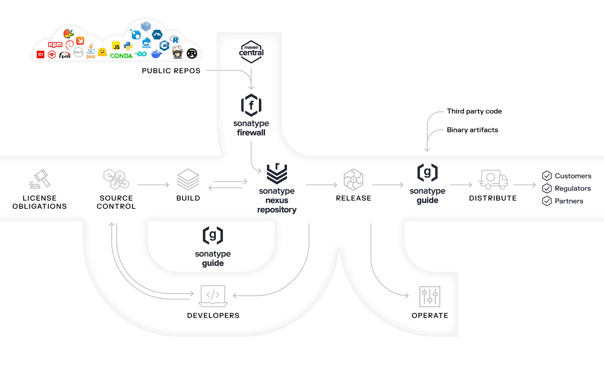
Enhance vulnerability management by integrating continuous monitoring, automated remediation, and policy enforcement into the software development lifecycle. Sonatype Guide identifies security vulnerabilities and provides actionable remediation guidance with risk-based prioritization based on severity and business impact.
Block Risk From Entering The SDLC
Sonatype Firewall proactively blocks malicious components before they enter your repositories. Leveraging real-time open source intelligence and behavioral analysis, it enforces security policies and quarantines suspicious artifacts, ensuring only trusted components are used in your applications.
Centrally Control Components
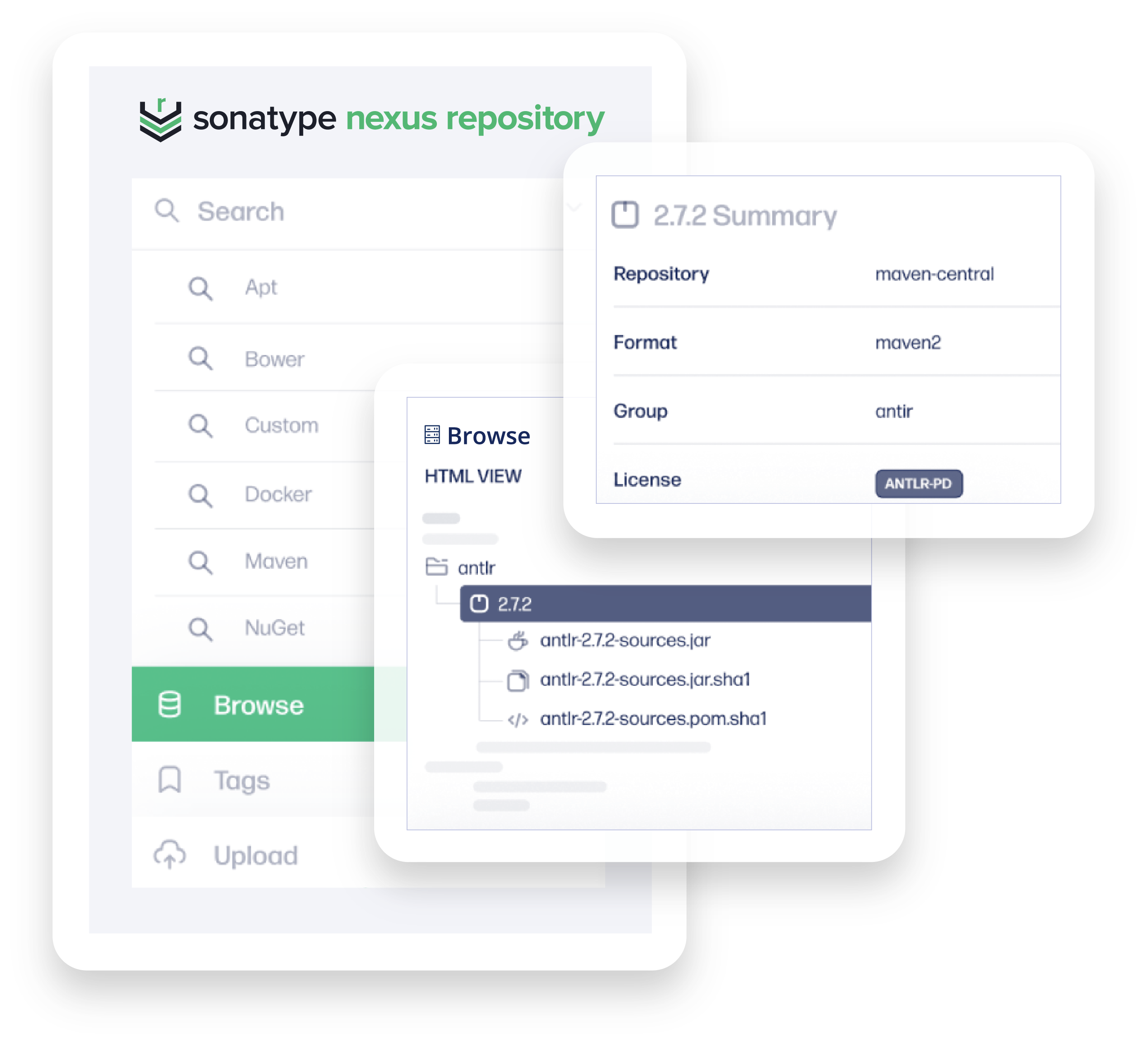
Sonatype Nexus Repository serves as a centralized platform to manage components, ensuring that only approved artifacts are used in development. By integrating with other Sonatype tools, it facilitates the enforcement of security policies, supports vulnerability scanning, and provides a single source of truth for all binaries.
Continuously Monitor Vulnerabilities
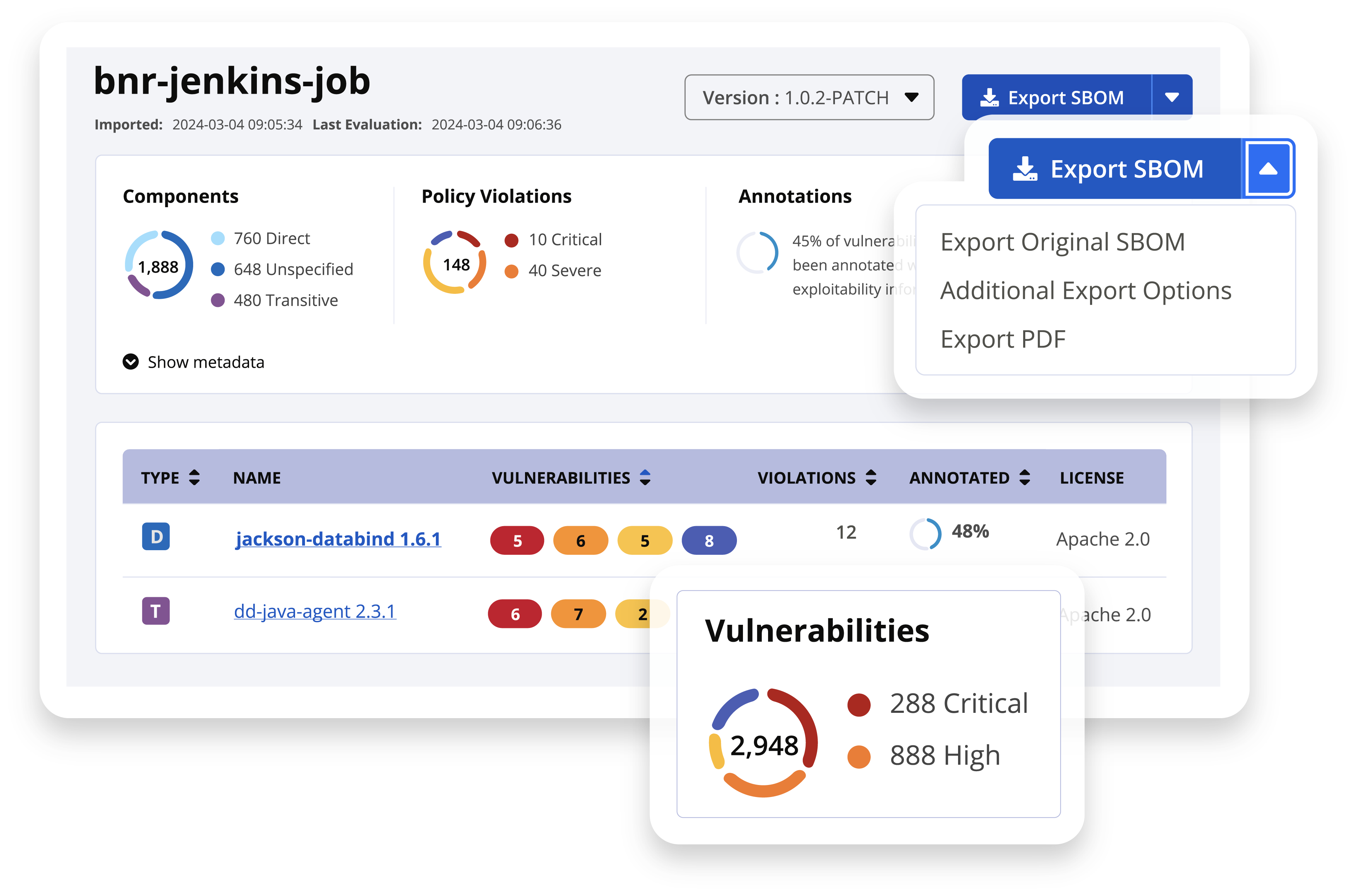
Streamline software vulnerability management by automating the creation, ingestion, and monitoring of AIBOMs and SBOMs. Sonatype Guide supports compliance with global regulations, provides visibility into first and open source components, and integrates VEX data to assess the exploitability of vulnerabilities.


Less Noise. Faster Remediation.
Sonatype helps teams reduce backlogs with precise intelligence, contextual prioritization, and automated software vulnerability management and remediation.
End-to-End Vulnerability Management with Sonatype Guide
Discover
Automatically scan components, leveraging advanced intelligence to detect vulnerabilities.
Assess
Gain rich insights and assess software risk with near-zero false positives and negatives.
Verify
Get context into your vulnerabilities with supporting risk justification and tracking.
Prioritize
Fix what matters most with risk-based prioritization leveraging exploitability data.
Remediate
Automate remediation and get precise guidance for anything that can’t be automated.
Report
Generate an SBOM report for every application and maintain governance across your SDLC.

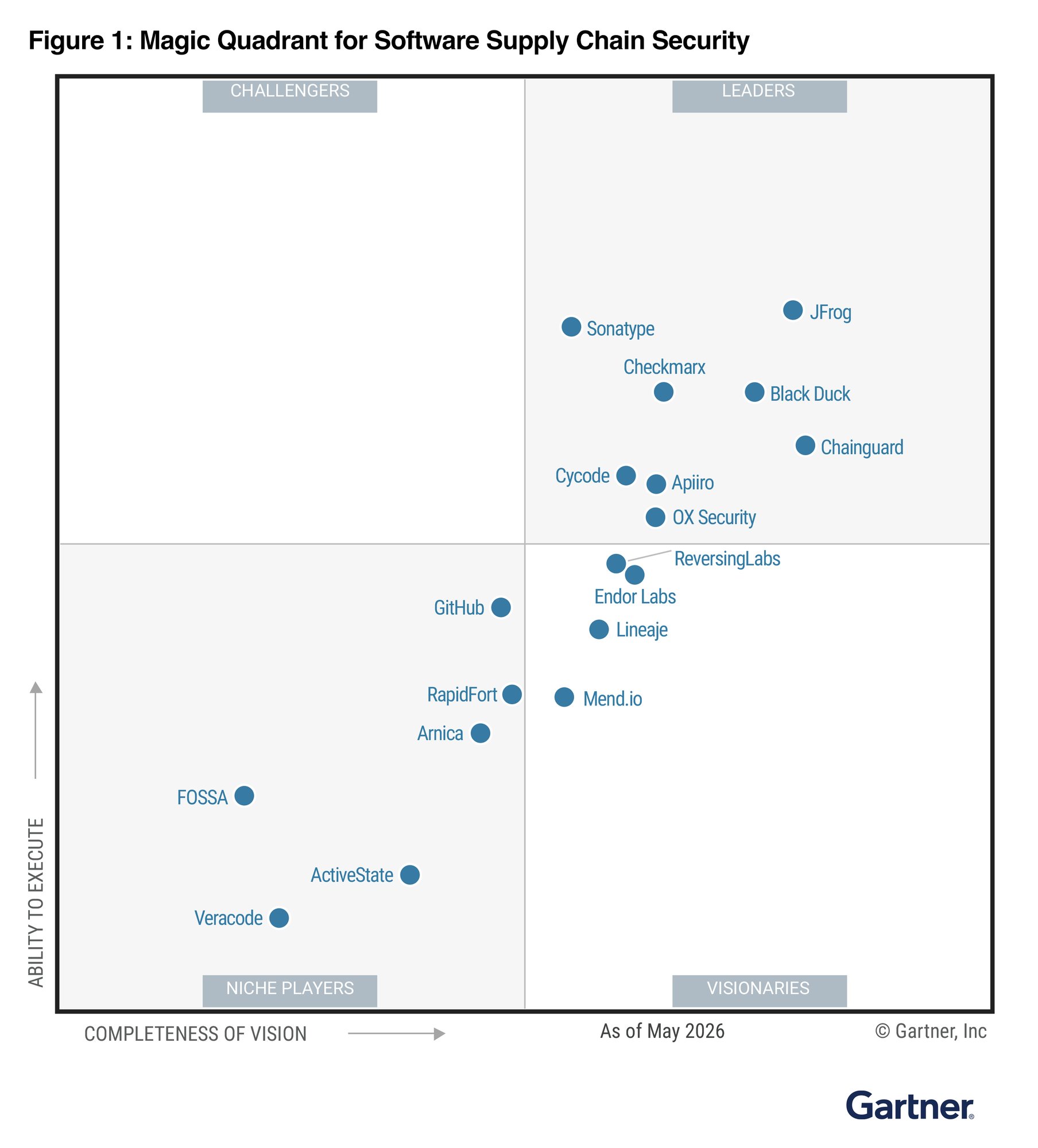
Sonatype Named a Leader in the 2026 Gartner® Magic Quadrant™ for Software Supply Chain Security
We’re proud to announce that Gartner has recognized Sonatype as a Leader in the 2026 Gartner® Magic Quadrant™ for Software Supply Chain Security, evaluating vendors helping organizations secure software across open source, AI-generated code, dependencies, and software supply chains.
Explore Vulnerability Management Insights
Frequently Asked Questions
How does vulnerability management change with agentic development?
AI coding assistants and agents can introduce and update dependencies faster than traditional review processes can keep pace. Sonatype brings trusted component intelligence, policies, and remediation into development workflows so developers and agents can make better dependency decisions from the start.
What is the difference between a software vulnerability and malware?
A software vulnerability is a flaw or weakness in code that can be exploited by attackers, while malware is malicious software intentionally designed to harm systems. Vulnerabilities are unintentional and require prompt management to prevent exploitation. Learn more about open source vulnerabilities and how they differ from malicious threats like malware.
What's the difference between risk-based prioritization and contextual prioritization?
Risk-based prioritization focuses solely on the severity of security threats, while contextual prioritization also considers factors like application criticality, exploitability, and business impact. Sonatype emphasizes contextual prioritization to help teams make smarter decisions, not just addressing security risk.
What are the best tools for vulnerability prioritization?
The best vulnerability prioritization tools look beyond severity scores to consider exploitability, reachability, and application context. Sonatype Guide helps teams reduce vulnerability noise and focus developers on risks that require action.
How do vulnerability management tools address vulnerabilities in transitive dependencies?
Vulnerability management tools help uncover and address risks in transitive dependencies by continuously scanning entire dependency trees, including indirect or nested components. Tools like Sonatype Guide identify and track these hidden components, providing visibility and automated alerts for known vulnerabilities. By shifting left, issues in transient dependencies can be detected earlier in development, reducing risk and enabling faster, more secure remediation.
How does Sonatype support open source vulnerability management and remediation?
Sonatype Guide identifies vulnerable open source dependencies, prioritizes the risks that matter, recommends safer versions, and automates remediation where possible. This helps engineering teams reduce vulnerability backlogs with less manual work.
How does a Software Bill of Materials (SBOM) support software vulnerability management?
An SBOM supports software vulnerability management by offering a clear inventory of all components in an application, including open source dependencies. This transparency enables teams to quickly identify and assess known vulnerabilities, streamline remediation efforts, and maintain stronger overall security throughout the software lifecycle.
Which tools are recommended for vulnerability scanning and management?
Look for vulnerability management tools that combine continuous scanning, accurate vulnerability intelligence, agentic dependency management, contextual prioritization, and automated remediation. Sonatype Guide brings these capabilities into developer and agentic workflows to help teams find and fix open source vulnerabilities faster.
Cut Your MTTR by 30%