
Using Webhooks to Integrate Nexus Lifecycle With Red Hat Quay - Part 2
By Curtis Yanko
3 minute read time
In Part 1 we looked at the mechanics of using a webhook from Red Hat Quay to trigger a Sonatype Lifecycle evaluation of a container. In part 2, we'll explore why that matters from a SDLC perspective, and how two webhooks can do a lot towards DevSecOps.
The first thing that comes to mind for me is that the registry might be the best place to start capturing container scans. The registry provides a nice choke point to begin the roll-out of adding security scans to your CI/CD pipeline. Updating every CI job can be a challenge, but a single webhook in a registry can immediately start capturing all the containers flowing into it.
Thanks to the Sonatype Lifecycle automatic application creation feature, we don't have to do anything in Sonatype Lifecycle except ensure it is turned on. I like to associate the app creation feature with an organization I call onBoarding. I can even turn on Grandfathering if I want to automatically accept any current risk, since this will be our first scan, even though the application has been around for a while.
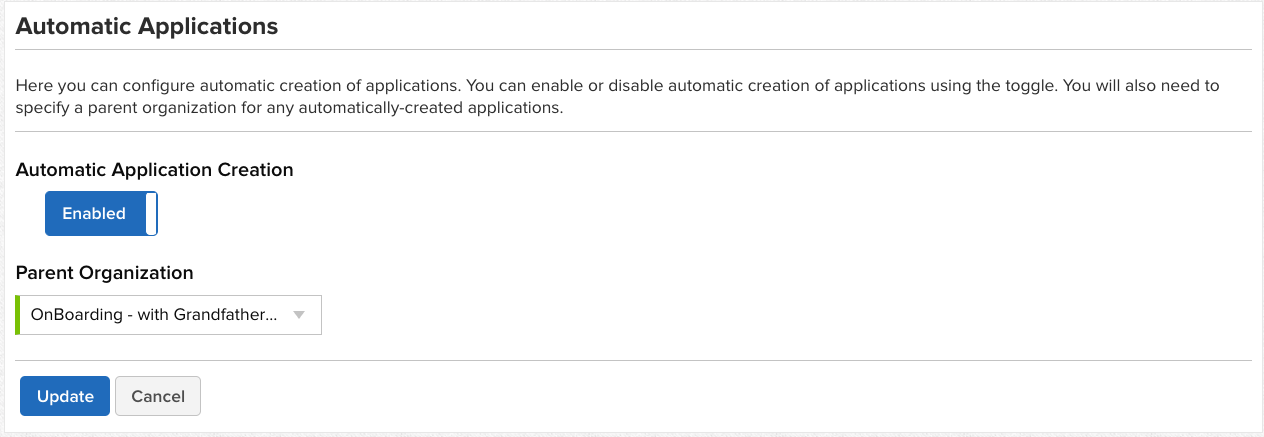
Later, when I'm ready to turn the scan on for the builds, I can move this app into the organization it belongs to, and categorize it, to apply any additional policies needed. I feel this strikes a nice balance to turn on security scans for everything, without interrupting the current pipeline. Over time, we can work with delivery teams to update their builds and configure their IDE's to push the feedback further left.
The second reason I like using a webhook in a registry is because I'm seeing a new pattern emerge when it comes to containers.
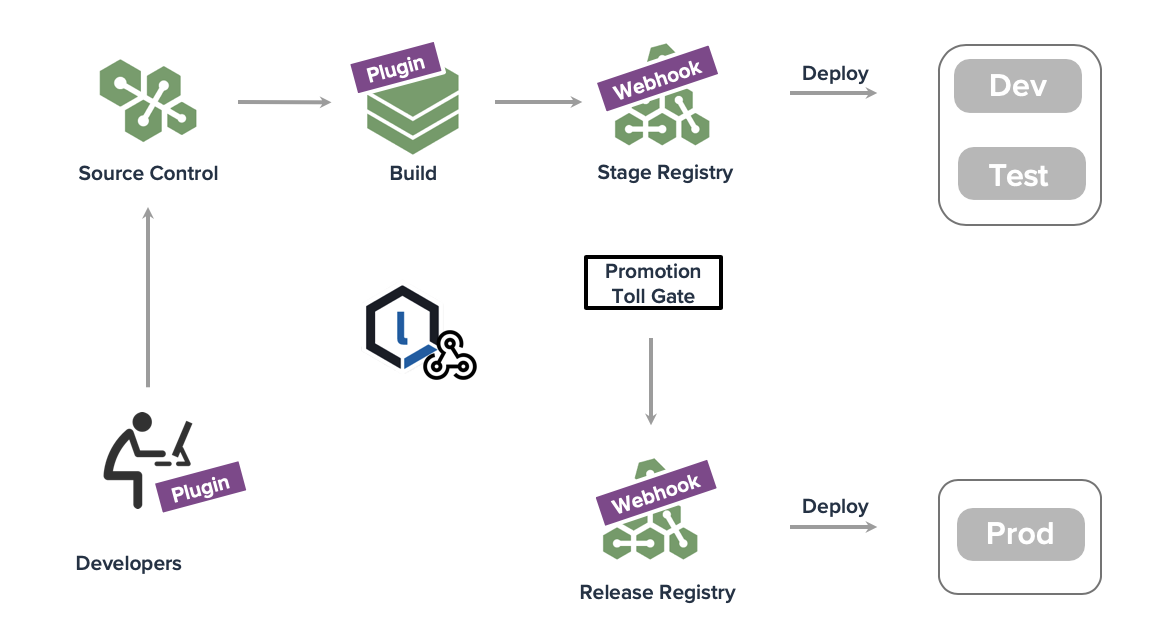
I'm seeing this toll-gating process becoming common as Operations folks look to ensure no one can deploy an image from DockerHub straight to Prod, while ensuring quality and security checks are passing. It also means you could use a docker registry in Sonatype Nexus Repository to support you build environments, and later push the images to pass the toll gate to a Quay instance that feeds you production clusters. Or, it could be a registry provided by your cloud provider, it doesn't matter. Truth is, this simple pattern creates a lot of flexibility and options for controlling the flow of containers to production.
The first webhook captures the inputs and can trigger both OS layer and Application layer component scans. In addition to traditional testing, you'll also want to know how this container stacks up against the Docker CIS Workbench and other compliance items. For that, I turn to Twistlock, which provides runtime protection, so Twistlock tests the container for testing.
Once all your testing looks good, the image can be promoted to the Release Registry, where it will be automatically deployed. Another webhook can update Sonatype Lifecycle to move the bill of materials to a phase where it will be continuously monitored for any new vulnerabilities while it's running in production. That's a lot of work for just two webhooks in the registries and a delivery aware tool like Twistlock.
When I pull back and look, I see a nice path for quick wins in a rollout with very little friction or overhead by starting on the delivery side of the SDLC. Our Sonatype Firewall solution can also immediately close the front door to new defective components entering the supply chain, while grandfathering lets us accept current risk, but then immediately stop net new vulnerabilities as they appear. All while new projects are automatically added when they come online. Beats the heck out of updating all the build jobs.

Curtis Yanko is a Sr Principal Architect at Sonatype and a DevOps coach/evangelist. Prior to coming to Sonatype Curtis started the DevOps Center of Enablement at a Fortune 100 insurance company and chaired a Open Source Governance Committee. When he isn’t working with customers and partners on how to build security and governance into modern CI/CD pipelines he can be found raising service dogs or out playing ultimate frisbee during his lunch hour. Curtis is currently working on building strategic technical partnerships to help solve for the rugged devops tool chain.
Explore All Posts by Curtis YankoTags

Try Nexus Repository Free Today
Sonatype Nexus Repository is the world’s most trusted artifact repository manager. Experience the difference and download Community Edition for free.